
Teams Functionality: Building Sales Systems That Work
Discover how robust teams functionality transforms B2B sales operations. Learn strategies to implement collaborative systems that drive revenue.
published
Modern B2B sales teams operate in an environment where collaboration is no longer optional-it's the foundation of revenue generation. The effectiveness of teams functionality directly impacts how quickly deals move through pipelines, how efficiently information flows between departments, and ultimately, how many opportunities convert to closed-won. Yet many organizations struggle with fragmented tools that create silos instead of fostering collaboration. Understanding the core components of effective teams functionality and implementing systems that support genuine teamwork has become a competitive necessity in 2026.
Understanding Core Components of Teams Functionality
Effective teams functionality encompasses far more than shared calendars and group chat channels. At its foundation, it requires systems that enable simultaneous access to critical information, transparent progress tracking, and seamless handoffs between team members.
The architecture of teams functionality begins with data accessibility. Every team member needs visibility into customer interactions, deal history, and engagement patterns without navigating multiple platforms or requesting access permissions. This transparency prevents duplicate outreach, ensures consistent messaging, and allows representatives to pick up conversations exactly where colleagues left off.
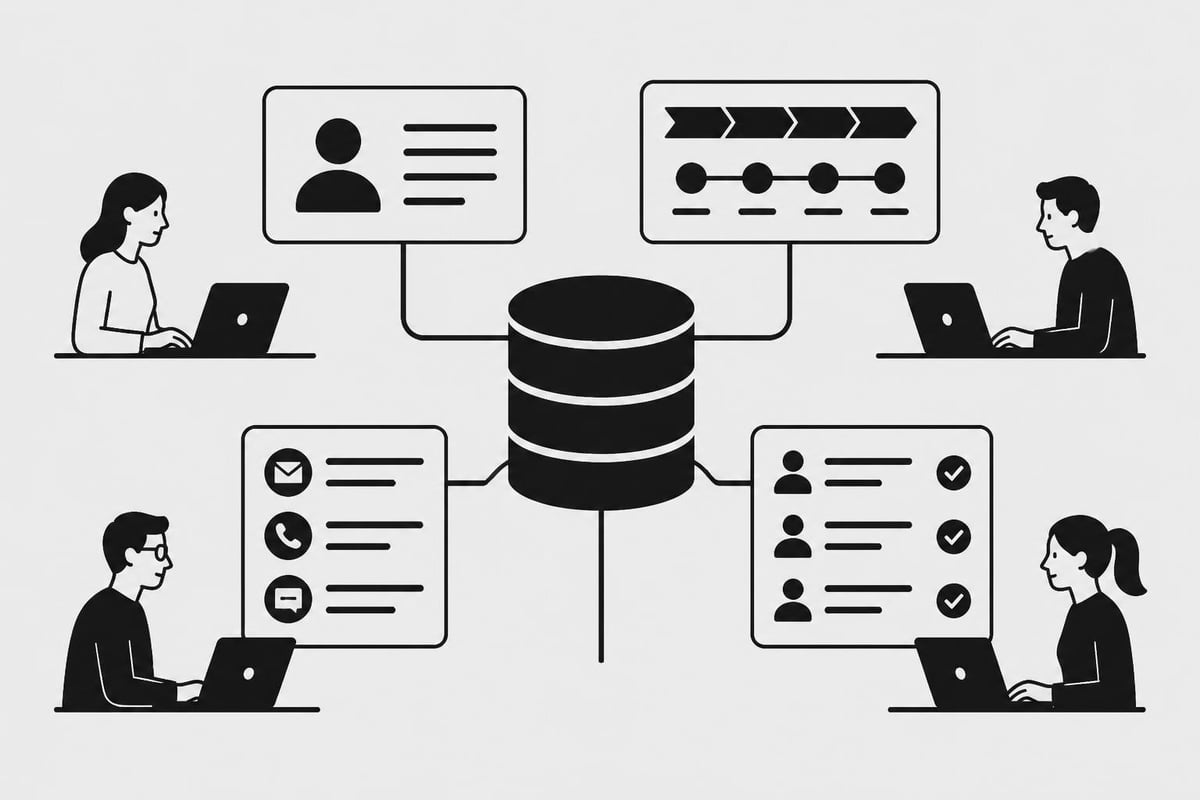
Key elements that define robust teams functionality include:
Real-time data synchronization across all touchpoints
Role-based permissions that balance security with accessibility
Integrated communication layers that capture context
Automated task routing and assignment logic
Shared visibility into pipeline health and team performance
Beyond these technical foundations, effective teams functionality requires workflows designed around how sales teams actually operate. Systems must accommodate the reality that deals rarely follow linear paths and often require input from multiple stakeholders across different departments.
Building Communication Frameworks That Support Sales Velocity
Communication structures within teams functionality determine whether collaboration accelerates or impedes deal progression. The challenge lies in creating channels that capture essential context without generating noise that buries critical information.
Successful B2B sales teams structure their communication around deal-centric threads rather than person-centric messaging. This approach ensures that all relevant context-from initial discovery notes to pricing discussions-lives with the opportunity record itself. When a team member needs to understand deal status, they access a complete narrative instead of hunting through scattered message threads.
Communication Type | Traditional Approach | Optimized Teams Functionality |
|---|---|---|
Deal updates | Email chains, Slack messages | Contextual notes within CRM |
Customer questions | Forwarded emails, screenshots | Linked conversation threads |
Internal coordination | Separate messaging app | Integrated collaboration layer |
Handoff documentation | Manual notes, verbal briefings | Automated context capture |
The distinction between effective and ineffective teams functionality often surfaces during territory transitions, account handoffs, or when senior closers engage on complex opportunities. Systems that capture context automatically eliminate the knowledge loss that typically accompanies these transitions.
Strengthening cross-departmental collaboration requires communication frameworks that extend beyond the sales team itself. Marketing needs visibility into which content resonates during sales conversations. Customer success needs complete deal history before onboarding new clients. Product teams benefit from understanding objections that surface during negotiations.
Designing Information Hierarchies
Teams functionality must present information in layers that match decision-making needs. Representatives require immediate access to next actions and recent activity. Managers need aggregated metrics and pipeline health indicators. Leadership wants trend analysis and forecast accuracy.
This hierarchical approach prevents information overload while ensuring relevant data surfaces at the right moments. A well-designed system shows a representative their scheduled follow-ups and recent customer interactions without burying them in company-wide performance metrics they cannot influence.
Integrating Workflow Automation Into Teams Functionality
Automation transforms teams functionality from a passive repository into an active system that guides behavior and eliminates manual coordination overhead. The goal is not to automate human judgment but to remove the administrative friction that prevents teams from focusing on revenue-generating activities.
Strategic automation within teams functionality addresses three primary categories: task routing, data hygiene, and context preservation. Each category directly impacts how efficiently teams operate and how much time representatives spend on actual selling.
Task routing automation ensures:
Inbound leads reach the appropriate representative based on territory, industry expertise, or current capacity
Follow-up reminders trigger at optimal intervals based on deal stage and previous engagement patterns
Internal approvals route to the correct stakeholders without manual tracking
Renewal opportunities surface with adequate preparation time
Data hygiene automation prevents the degradation that inevitably occurs when teams manually maintain records across multiple systems. Automated enrichment pulls company information, contact details, and firmographic data into records without requiring representative input. Duplicate detection prevents split records that fragment customer history.
Context preservation automation captures the informal knowledge that typically lives only in representatives' heads. Recording tools that automatically transcribe sales calls and extract key points ensure that negotiation details, technical requirements, and decision criteria become part of the permanent record. This captured context proves invaluable when deals stall or when different team members engage at various stages.
For organizations seeking to optimize their current technology stack, conducting a comprehensive sales function audit reveals which automation opportunities would deliver the highest impact on team performance and where existing tools already provide underutilized functionality.
Measuring Teams Functionality Performance
Quantifying the effectiveness of teams functionality requires metrics that extend beyond traditional sales KPIs. While quota attainment and win rates remain important, they do not directly measure how well teams collaborate or how effectively systems support teamwork.
Leading indicators of teams functionality health include response time to internal requests, deal velocity by stage, and handoff completion rates. These metrics reveal whether systems enable or impede collaboration.
Critical Teams Functionality Metrics
Metric Category | Measurement | Target Performance |
|---|---|---|
Information Access | Time to locate customer history | Under 30 seconds |
Collaboration Speed | Internal response time | Under 2 hours |
Deal Velocity | Stage-to-stage progression rate | 20% improvement YoY |
Context Retention | Handoff knowledge transfer score | Above 85% |
System Adoption | Daily active usage rate | Above 90% |
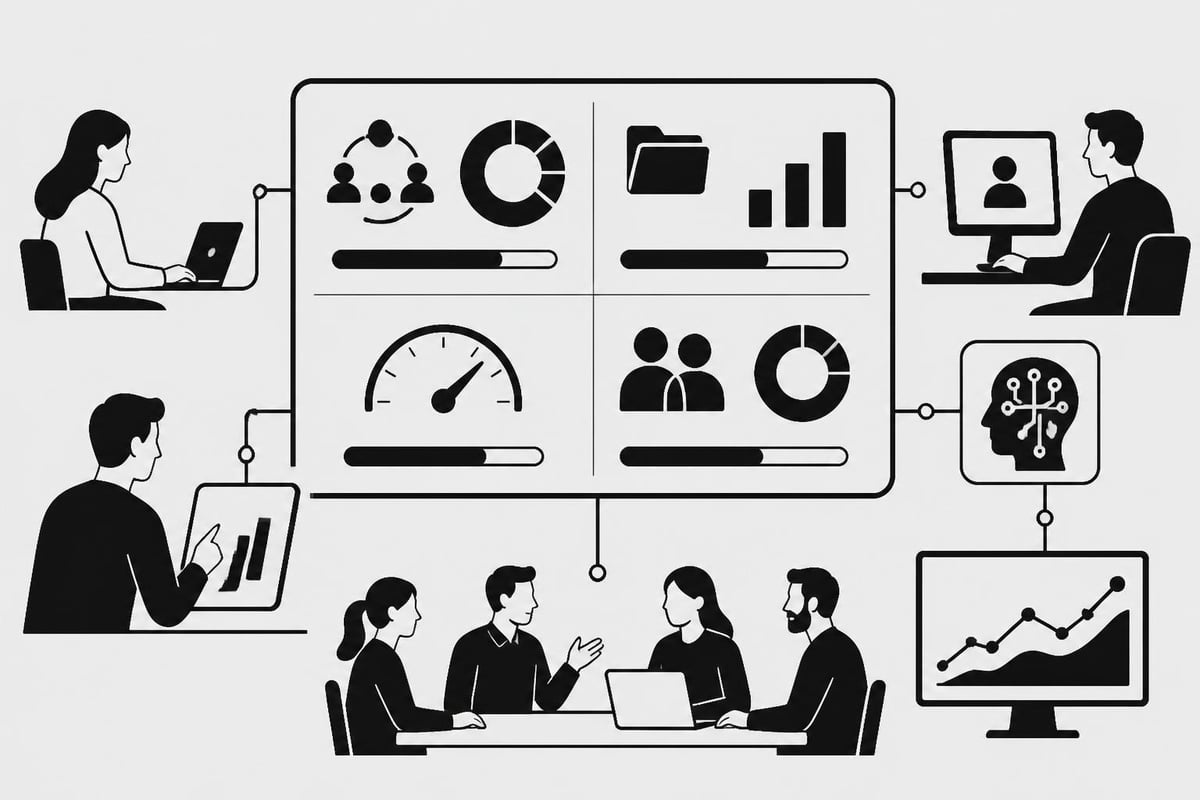
Beyond quantitative metrics, qualitative feedback from team members provides essential insights into teams functionality effectiveness. Regular surveys asking representatives where they experience friction, what information remains difficult to access, and which processes feel redundant reveal improvement opportunities that numbers alone miss.
The relationship between teams functionality and revenue outcomes becomes clear when tracking deal progression. Opportunities that move through discovery, proposal, and negotiation stages faster typically receive better collaborative support. Improving team collaboration directly correlates with shortened sales cycles and improved win rates.
Aligning Teams Functionality With Sales Methodologies
Generic collaboration tools often fail in sales environments because they do not account for how B2B sales teams actually operate. Effective teams functionality must align with the specific sales methodology the organization employs, whether that involves solution selling, MEDDIC qualification, or challenger-based approaches.
This alignment means structuring information capture, stage definitions, and required actions around methodology frameworks. A team using MEDDIC should see Metrics, Economic Buyer, Decision Criteria, Decision Process, Identify Pain, and Champion fields prominently featured in their opportunity records. The system should guide representatives through these qualification criteria rather than treating them as optional fields buried in lengthy forms.
Sales methodologies also dictate collaboration patterns. Teams practicing multi-threading should see relationship maps showing all stakeholder connections and engagement history for each contact. Organizations emphasizing executive alignment need visibility into C-level interactions and strategic conversation themes.
When teams functionality reflects actual selling processes, adoption becomes natural rather than forced. Representatives recognize the system as supporting their work instead of creating additional administrative burden. This recognition drives consistent usage, which in turn improves data quality and collaborative effectiveness.
Implementing Teams Functionality Across Distributed Teams
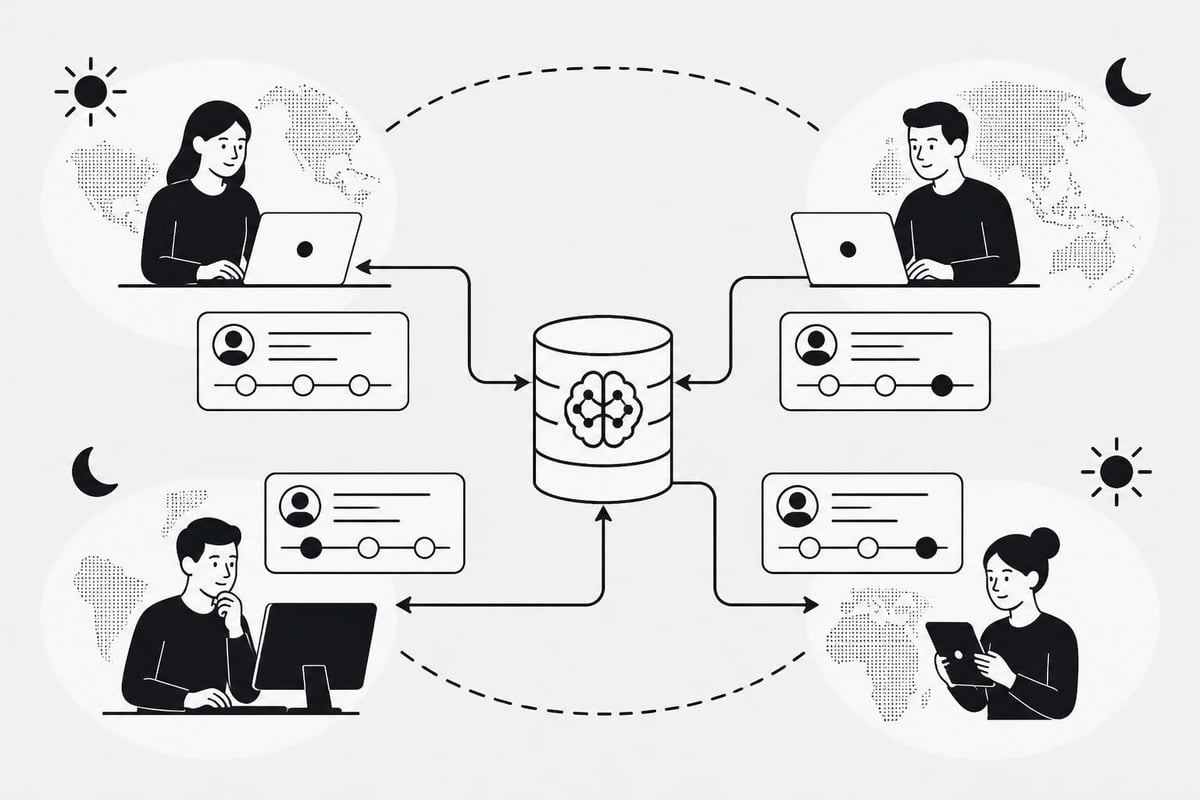
Remote and hybrid work models have fundamentally changed teams functionality requirements. Systems designed for co-located teams often fail to support the asynchronous communication and independent decision-making that distributed teams require.
Distributed teams functionality must emphasize comprehensive documentation over verbal updates. Every decision, customer insight, and strategic direction needs written capture because the assumption that team members can "just ask" someone no longer holds. This documentation requirement is not about bureaucracy-it is about ensuring that representatives working across time zones can access the context they need without waiting for colleagues to come online.
Essential features for distributed teams functionality:
Asynchronous status updates that eliminate excessive meetings
Recorded decision rationale that explains the "why" behind directions
Time-zone-aware scheduling and notification systems
Comprehensive search functionality across all communications and records
Mobile accessibility for representatives working from various locations
Effective team collaboration strategies for distributed environments prioritize clear documentation standards and regular asynchronous check-ins over synchronous meetings that accommodate only certain time zones. The best systems make it impossible for critical information to exist only in someone's memory or in a meeting that half the team could not attend.
Video recording tools integrated into teams functionality allow representatives to share detailed customer insights, demo walkthroughs, or complex situation explanations more effectively than written summaries. These recordings become searchable assets that serve as training materials and provide context for team members who join accounts mid-cycle.
Addressing Common Teams Functionality Failures
Despite significant investment in collaboration tools, many B2B sales organizations struggle with teams functionality that hinders rather than helps. Understanding common failure patterns allows teams to avoid predictable pitfalls.
The most prevalent failure involves tool proliferation. Organizations accumulate separate platforms for CRM, communication, proposal generation, contract management, and analytics. Each tool promises specific capabilities, but integration gaps create information silos that destroy collaborative efficiency. Representatives spend more time updating systems than selling.
Another frequent issue stems from over-engineered workflows that attempt to enforce rigid processes through technology. When teams functionality becomes primarily about compliance and control, representatives find workarounds that bypass systems entirely. The most effective implementations balance guidance with flexibility, recognizing that complex B2B sales rarely follow identical paths.
Data quality degradation represents a third common failure mode. Without automated enrichment and duplicate prevention, CRM systems gradually fill with incomplete records, outdated information, and fragmented customer histories. This degradation occurs slowly enough that teams acclimate to working around poor data until the system becomes nearly useless for collaboration.
Recovery Strategies
Failure Pattern | Impact | Solution Approach |
|---|---|---|
Tool sprawl | Information silos, wasted time | Consolidate to integrated platform |
Process rigidity | System abandonment, workarounds | Build flexibility into workflows |
Data degradation | Lost context, duplicate effort | Implement automated data hygiene |
Adoption resistance | Partial usage, inconsistent data | Align system with actual workflows |
Organizations experiencing these failures often benefit from examining where AI actually moves the needle in sales operations versus where it adds complexity without corresponding value. The goal is systems that enhance human capability rather than attempting to replace human judgment.
Scaling Teams Functionality as Organizations Grow
Teams functionality requirements evolve substantially as organizations scale from early-stage startups to mid-market companies to enterprise operations. Systems that work effectively for five representatives often collapse under the complexity of fifty or five hundred.
Early-stage organizations can often operate with minimal formal structure. A small team shares sufficient context through daily interaction that elaborate documentation and workflow automation provide limited value. As headcount grows, this informal approach breaks down. New hires lack the historical context that founding team members possess. Geographic distribution eliminates hallway conversations. Specialization creates functional boundaries.
Scaling teams functionality effectively requires anticipating these transitions and implementing structure before informal approaches fail. Implementing best practices for team collaboration includes establishing documentation standards, creating information hierarchies, and building automation that captures institutional knowledge before it exists only in departed employees' memories.
The challenge involves right-sizing structure for current needs while building foundations that accommodate future growth. Over-engineering systems for a ten-person team wastes time on unused functionality. Under-engineering creates technical debt that becomes increasingly expensive to address as the organization scales.
Optimizing Teams Functionality for Different Sales Roles
Effective teams functionality recognizes that various sales roles require different information, workflows, and collaboration patterns. Systems designed around a single representative archetype inevitably serve some roles well while frustrating others.
Sales development representatives need high-volume efficiency. Their teams functionality should emphasize rapid lead qualification, automated sequencing, and clear handoff protocols. They benefit from templated communication and streamlined data entry that allows processing maximum prospects with minimum friction.
Account executives require different capabilities. Their work involves complex, multi-stakeholder deals that demand comprehensive relationship mapping, detailed conversation history, and sophisticated pipeline management. Teams functionality for account executives should provide deep context and support strategic selling rather than optimizing for volume.
Sales engineers need technical documentation, integration requirements, and product configuration details readily accessible. Their collaboration patterns involve working alongside account executives while maintaining separate workstreams focused on technical validation and proof-of-concept coordination.
Managers require aggregated visibility across their teams, pipeline health indicators, and coaching tools that identify where representatives need support. Their teams functionality should surface performance trends, flag at-risk opportunities, and provide frameworks for effective one-on-one discussions.
Leveraging AI Within Teams Functionality
Artificial intelligence is transforming teams functionality from passive record systems into proactive assistants that surface insights, suggest actions, and eliminate routine work. However, successful AI integration requires thoughtful implementation that enhances rather than replaces human judgment.
AI-powered teams functionality excels at pattern recognition across large datasets. It can identify which email subject lines generate highest response rates, which conversation topics correlate with deal progression, and which accounts match profiles of successful customers. These insights guide representative behavior without prescribing rigid rules.
Automated meeting summarization and action item extraction represent high-value AI applications within teams functionality. Instead of representatives spending time documenting calls, AI tools generate structured summaries that capture key points, next steps, and important customer statements. This automation preserves context while freeing representatives to focus on conversation quality.
Predictive analytics powered by AI help teams prioritize opportunities based on win probability, identify accounts at risk of churn, and surface upsell potential. When integrated directly into daily workflows rather than isolated in separate dashboards, these predictions guide tactical decisions about time allocation and engagement strategy.
For organizations building custom AI solutions tailored to their specific sales processes, the key is starting with clear use cases where AI solves actual problems rather than implementing technology for its own sake. The most effective implementations augment human capabilities in areas like data analysis and administrative work while preserving human control over relationship management and strategic decisions.
Effective teams functionality transforms how B2B sales organizations operate, replacing fragmented tools and siloed information with integrated systems that enable genuine collaboration. The organizations that win in 2026 recognize that technology should consolidate complexity rather than add to it. If your sales team is struggling with disconnected tools and inefficient workflows, erakraft inc. specializes in building unified sales systems that enhance collaboration while eliminating the bloat that slows teams down. We design custom solutions around how your team actually sells, then layer in AI where it delivers measurable impact.
