
Into One: Consolidating Sales Tools for Maximum Impact
Discover how merging multiple sales tools into one unified system reduces complexity, boosts productivity, and helps teams close more deals.
published
The modern B2B sales landscape has become cluttered with specialized tools, each promising to solve a specific problem. Sales teams juggle CRMs, email sequencers, analytics platforms, proposal software, video conferencing tools, and dozens of other applications. This fragmentation creates inefficiency, data silos, and mental overhead that distracts from the core mission of closing deals. The solution lies in bringing these disparate systems into one cohesive platform that actually serves the sales process rather than complicating it.
The Hidden Cost of Tool Sprawl
Sales organizations today use an average of ten or more separate tools to manage their pipeline. Each application requires its own login, has its own interface, and stores data in isolation from the others. This scattered approach creates friction at every stage of the sales process.
The real costs extend beyond subscription fees:
Time wasted switching between applications
Data inconsistency across platforms
Training overhead for new team members
Integration maintenance and troubleshooting
Reduced visibility into the complete sales picture
When sales professionals spend more time managing their software than engaging with prospects, something has gone fundamentally wrong. The average sales representative loses approximately 20 hours per month navigating between disconnected tools. That translates to 240 hours annually that could be spent on revenue-generating activities.
Why Consolidation Matters Now
The pressure to consolidate multiple functions into one streamlined system has never been greater. Economic uncertainty demands efficiency, while competitive markets require speed. Sales teams need to move quickly from initial contact to closed deal without technology getting in the way.
Consider how much mental energy gets consumed remembering which tool houses which information. Is the latest customer conversation logged in the CRM, the email platform, or the meeting notes app? Did the proposal get sent through the document system or the CRM? These micro-decisions accumulate into significant cognitive load.
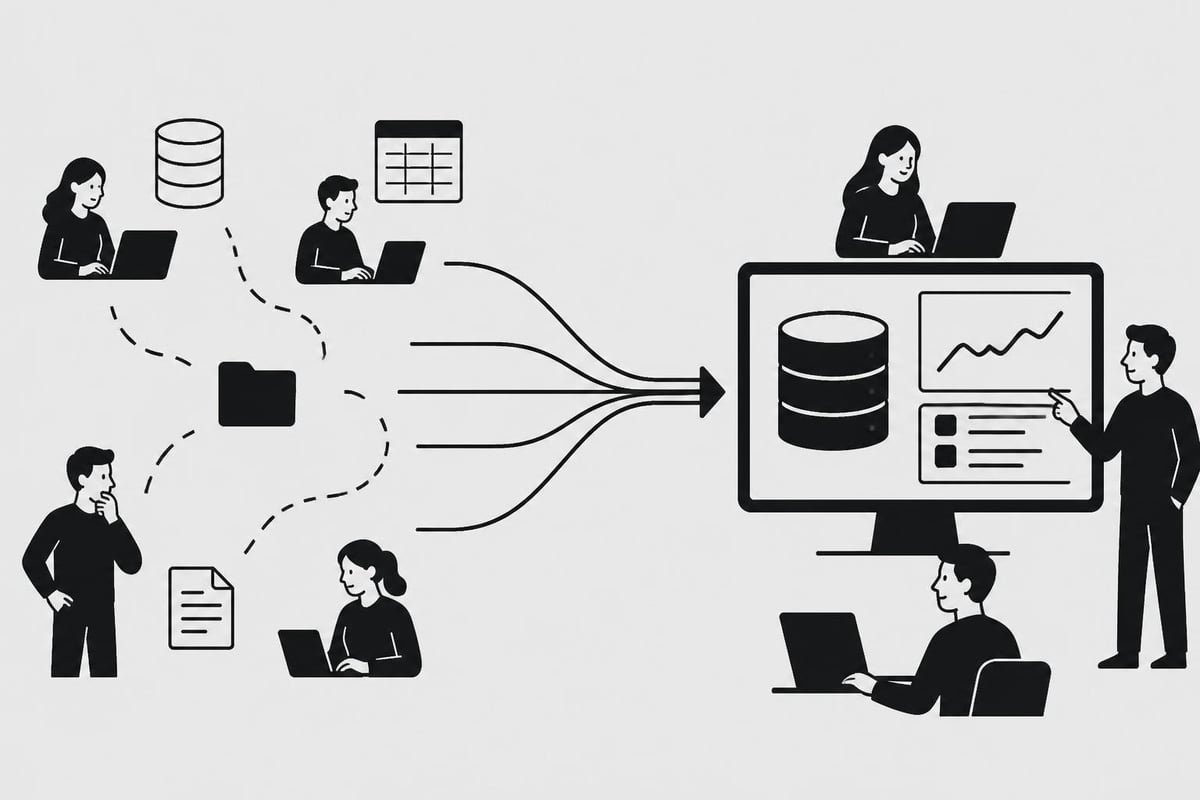
Understanding Integration Versus True Consolidation
Many organizations attempt to solve tool sprawl through integrations, connecting their various platforms via APIs or middleware solutions like Zapier. While integrations can help, they rarely deliver the seamless experience that comes from bringing functionality into one native environment.
Approach | Advantages | Limitations |
|---|---|---|
Multiple Tools + Integrations | Preserves specialized features, Familiar interfaces | Requires constant maintenance, Still requires context switching, Data sync delays |
All-in-One Platform | Single source of truth, Unified interface, No sync issues | May lack specialized features, Higher initial migration cost |
Custom Consolidated System | Tailored to workflows, Only what you need, Deep integration possible | Requires development expertise, Upfront investment |
Integrations create the illusion of connectivity while maintaining the underlying complexity. When an integration breaks, which happens regularly, the entire workflow stops. Sales reps find themselves troubleshooting technology instead of selling.
The Case for Purpose-Built Systems
The most effective approach combines the best elements of existing tools into one system purpose-built for how your team actually sells. This means understanding your unique sales motion, identifying which capabilities truly matter, and eliminating everything else.
Generic all-in-one platforms try to be everything to everyone, resulting in bloated interfaces packed with features most teams never use. The alternative is a focused system that handles your specific requirements elegantly. This concept of combining multiple functions into a single entity becomes powerful when executed with precision.
Building Your Consolidated Sales System
Creating a unified sales system requires strategic thinking about which tools deserve a place in your stack and which can be eliminated or replaced. The goal is not to reduce the number of tools for its own sake, but to create a coherent environment where information flows naturally and sales activities happen with minimal friction.
Start with a comprehensive audit:
List every tool your sales team currently uses
Document what each tool actually does (not what it promises to do)
Identify overlapping functionality across tools
Measure actual usage patterns and adoption rates
Calculate total cost of ownership including time spent managing tools
Many teams discover they are paying for capabilities that either duplicate what they already have elsewhere or that no one actually uses. The Sales Function Audit approach provides a structured framework for uncovering these inefficiencies and creating an actionable plan.
Determining Your Core Requirements
Not every sales team needs the same capabilities merged into one system. An inside sales team selling to SMBs has different requirements than an enterprise sales organization with a nine-month sales cycle. The key is identifying your non-negotiables versus nice-to-haves.
Essential elements for most B2B sales systems:
Contact and account management with complete interaction history
Pipeline tracking with stage-specific workflows
Email integration that captures all correspondence automatically
Task and activity management tied to specific deals
Reporting and analytics that surface actionable insights
Document management for proposals, contracts, and collateral
Beyond these basics, your specific sales motion determines what else gets brought into one unified environment. Complex enterprise sales might require deep proposal customization and approval workflows. High-velocity sales teams might need sophisticated calling features and conversation intelligence.

The Role of AI in Unified Sales Systems
Artificial intelligence has transformed what is possible when consolidating sales functionality into one platform. AI does not just connect existing tools; it creates entirely new capabilities that were not feasible when data lived in isolated silos.
When all sales data flows into one system, AI can analyze patterns across the complete customer journey. It can identify which email subject lines lead to meetings, which meeting topics correlate with closed deals, and which account characteristics predict churn risk. These insights only emerge when data is unified rather than scattered across disconnected platforms.
Intelligent Automation That Actually Helps
The promise of sales automation often exceeds reality. Many automation tools create rigid workflows that break down the moment a prospect does something unexpected. AI-powered systems built into one cohesive platform can adapt to context and make nuanced decisions.
Consider lead scoring, a common automation use case. Traditional rule-based systems assign points based on predetermined criteria. AI within a unified system can analyze hundreds of signals simultaneously, learning from past conversion patterns to predict which leads deserve immediate attention today. It can adjust its recommendations as market conditions change without manual reconfiguration.
AI capabilities enhanced by consolidation:
Predictive pipeline analysis using complete historical data
Automated data entry that captures information from emails, calls, and meetings
Intelligent next-best-action recommendations based on similar past deals
Conversational interfaces that let reps query the system naturally
Anomaly detection that flags unusual patterns requiring human attention
The difference between bolting AI onto a fragmented tech stack versus building it into one integrated system is profound. Fragmented approaches require constant data synchronization, create duplicate records, and produce unreliable insights. Integrated AI operates on a single source of truth, delivering consistent and actionable intelligence. For organizations ready to leverage custom AI built around their actual sales process, exploring tailored AI solutions makes strategic sense.
Common Obstacles to Consolidation
Despite the clear benefits of bringing sales tools into one unified system, many organizations resist making the change. The obstacles are real, but most are surmountable with proper planning and realistic expectations.
Fear of Disruption
Sales teams worry that transitioning to a new system will interrupt their rhythm during critical selling periods. This concern has merit. A poorly executed migration can indeed cause temporary productivity loss. The solution is phased implementation that maintains continuity while gradually shifting to the new environment.
Concern | Mitigation Strategy |
|---|---|
Data loss during migration | Parallel operation period, comprehensive backups, validation checkpoints |
Learning curve slows productivity | Progressive rollout, role-specific training, always-available support |
Integration with external systems breaks | Testing environment, gradual cutover, fallback procedures |
Customizations get lost | Document current workflows, replicate critical customizations, improve where possible |
The key is recognizing that short-term adjustment costs are investments in long-term efficiency. Three months of reduced productivity during transition can deliver years of improved performance.
Sunk Cost Fallacy
Organizations often continue using inadequate tools because they have already invested heavily in them. The logic goes: "We spent six months implementing this CRM, trained everyone on it, and paid for annual licenses. We cannot abandon it now." This thinking ignores the ongoing cost of maintaining a suboptimal system.
The question is not whether past investments were worthwhile, but whether continuing on the current path serves your future goals. Consolidating into one effective system means accepting that previous technology decisions, made with the best available information at the time, may no longer be optimal given current capabilities and competitive pressures. The concept of transformation applies here, changing direction toward a better solution rather than stubbornly maintaining course.
Practical Steps for Implementation
Moving from a fragmented tool collection to one cohesive system requires methodical execution. Rushing the process creates chaos, while excessive caution extends the timeline unnecessarily. The right balance maintains momentum while managing risk.
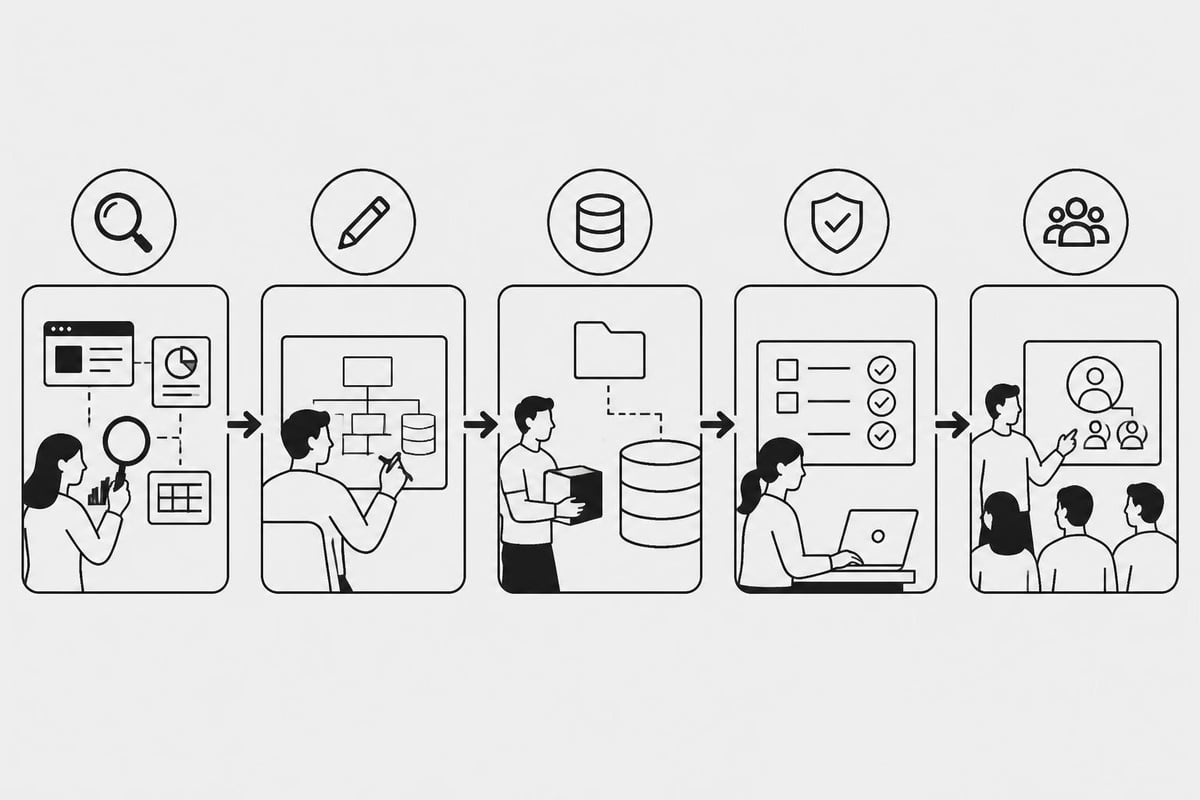
Phase 1: Discovery and Design (Weeks 1-3)
Document your current state comprehensively. Map every tool, integration, workflow, and data source. Interview sales team members about what actually works and what creates frustration. Analyze usage data to separate perception from reality.
Design the target state based on findings. Define which capabilities get merged into one platform, which get eliminated entirely, and which remain separate for good reasons. Create detailed specifications for required functionality.
Phase 2: Build or Configure (Weeks 4-8)
Either configure an existing platform or build a custom solution that matches your specifications. The build-versus-buy decision depends on how closely available platforms match your requirements and whether you have access to development resources.
Custom-built systems offer perfect fit but require more time and expertise. Configurable platforms provide faster implementation but may require compromising on some requirements. Many organizations find the optimal path combines both, using a robust platform foundation enhanced with custom components where standard features fall short.
Phase 3: Migration and Testing (Weeks 9-11)
Move data systematically from old systems into one new environment. Start with historical records, then recent data, then real-time information. Validate data quality at each stage before proceeding.
Test thoroughly with a subset of users before full deployment. Identify edge cases, workflow issues, and integration problems in a controlled setting where failures do not impact the entire team.
Phase 4: Rollout and Refinement (Week 12+)
Deploy to the full sales team in stages, not all at once. Start with early adopters who can provide feedback and help colleagues through the transition. Provide intensive support during the first two weeks when questions and issues peak.
Gather feedback continuously and make adjustments. No system emerges perfect from initial deployment. The goal is rapid iteration toward optimal configuration based on real-world usage patterns.
Measuring Success After Consolidation
Bringing tools into one unified system should deliver measurable improvements. Defining success metrics before implementation provides accountability and helps justify the investment to stakeholders.
Time-Based Metrics
The most immediate benefit appears in time savings. Sales representatives should spend fewer hours on administrative tasks and more time with prospects and customers.
Average time from lead assignment to first contact
Hours per week spent on data entry and system maintenance
Time required to prepare for customer meetings
Speed of quote and proposal generation
Duration of new rep onboarding
Track these metrics before consolidation to establish baselines, then monitor weekly during the first quarter after deployment. Most organizations see 15-30% time savings within three months as the team becomes proficient with the new environment.
Quality and Consistency Metrics
Beyond speed, consolidation should improve data quality and process consistency. When information flows automatically into one system instead of requiring manual entry across multiple platforms, accuracy increases and gaps decrease.
Key quality indicators:
Percentage of customer interactions logged properly
Data completeness scores for key fields
Duplicate record rates
Time lag between activity and documentation
Adherence to defined sales processes
These metrics often show dramatic improvement because the consolidated system makes correct behavior easier than incorrect behavior. When logging a call automatically captures all relevant details and associates them with the right account, records stay current without extra effort.
Business Outcome Metrics
Ultimately, the consolidated system should contribute to better business results. While many factors influence revenue, improved efficiency and data quality create measurable impact.
Win rate changes across different deal sizes
Average deal size and velocity
Pipeline coverage ratios and forecast accuracy
Customer retention and expansion rates
Revenue per sales representative
Isolating the system's impact requires comparing performance to appropriate benchmarks and controlling for market factors. Most organizations use year-over-year comparisons and cohort analysis to understand how consolidation affects outcomes.
The Evolution Toward Unified Systems
The trend toward bringing multiple capabilities into one platform will accelerate over the next several years. Market forces push in this direction as vendors expand their offerings and customers demand simplicity. The old model of best-of-breed point solutions connected through fragile integrations cannot compete with purpose-built systems designed for coherence.
This evolution mirrors what happened in other business functions. Marketing moved from scattered tools to marketing automation platforms. Customer service consolidated around comprehensive support systems. Sales is following the same trajectory, though with considerations unique to the consultative selling environment.
The winners will be organizations that consolidate thoughtfully, preserving what works while eliminating complexity that does not serve their specific sales motion. The losers will be those who either cling to fragmented tools too long or who consolidate hastily without considering their unique requirements. Success requires understanding that the goal is not consolidation for its own sake, but building an integrated whole that amplifies sales effectiveness.
Looking ahead, the boundaries between different sales functions will blur further. Systems will combine prospecting, engagement, pipeline management, analytics, and enablement into one seamless experience. AI will provide the connective tissue, automatically routing information and triggering actions based on context rather than rigid rules. Sales professionals will interact with a single intelligent assistant that handles the mechanics while they focus on strategy and relationships.
Building for Your Team's Reality
Every sales organization has unique characteristics that should inform how they approach consolidation. Company size, deal complexity, sales cycle length, and team structure all matter. The system that works brilliantly for a fifty-person inside sales team will not suit a ten-person enterprise sales organization.
Considerations for different sales models:
High-velocity, low-complexity sales: Emphasize automation, standardized workflows, and efficiency. The system should handle routine tasks automatically and surface only exceptions requiring human judgment.
Enterprise sales with long cycles: Prioritize relationship tracking, collaboration features, and sophisticated pipeline analysis. The system needs to maintain context across months or years of interactions.
Channel or partner sales: Focus on external collaboration, deal registration, and partner enablement. The system must extend beyond internal users to support ecosystem participants.
Hybrid models: Require flexibility to support different sales motions within one environment. Segmentation and role-based experiences prevent complexity from overwhelming any single user group.
The common thread is that the system should match how your team actually operates, not force them to conform to generic processes. This is where custom sales systems demonstrate their value, built around real workflows rather than theoretical best practices.
Beyond Technology to Transformation
Consolidating tools into one unified system enables transformation that extends beyond the technology itself. When friction decreases and visibility increases, sales organizations can fundamentally rethink how they approach their market.
Teams discover that activities previously considered impractical become feasible. Personalization at scale becomes possible when the system knows everything about every customer interaction. Proactive account management replaces reactive responses when AI monitors signals and alerts reps to opportunities and risks. Strategic planning improves when accurate data flows into one dashboard instead of being reconstructed from multiple sources.
The system becomes infrastructure that supports innovation rather than a constraint that limits what is possible. This shift from technology as obstacle to technology as enabler marks the true value of thoughtful consolidation. Sales leaders can focus on strategy, messaging, and market dynamics instead of wrestling with software. Representatives can concentrate on understanding customer needs and crafting solutions instead of fighting their tools.
This transformation does not happen automatically. It requires intentional design, careful implementation, and ongoing refinement. Organizations that treat consolidation as a one-time project miss the opportunity for continuous improvement. Those that view it as an ongoing evolution toward better sales performance unlock compounding benefits over time.
Bringing scattered sales tools into one cohesive system reduces complexity, improves data quality, and frees sales teams to focus on what matters: building relationships and closing deals. The path from fragmented tools to unified platform requires careful planning, but the efficiency gains and competitive advantages justify the effort. If your sales organization is struggling with tool sprawl and disconnected systems, erakraft inc. specializes in building custom sales systems that consolidate your existing tools into one unified environment, helping your team spend less time managing software and more time driving revenue.
