
Sales Tools Guide: Building Systems That Close Deals
Master the landscape of sales tools in 2026. Learn to build efficient systems, avoid bloat, and leverage AI where it matters for B2B teams.
published
The modern B2B sales environment presents a paradox. Sales professionals have access to more sophisticated technology than ever before, yet many teams report feeling overwhelmed rather than empowered by their tech stacks. The average sales representative now toggles between six to ten different platforms daily, fragmenting their attention and diluting their effectiveness. Understanding which sales tools genuinely move the needle versus which create operational drag has become a critical competency for sales leaders in 2026.
The Evolution of Sales Technology
The sales technology landscape has transformed dramatically over the past decade. What began with basic contact management systems has exploded into a complex ecosystem spanning customer relationship management, sales engagement, conversation intelligence, data enrichment, and artificial intelligence capabilities.
Modern sales tools fall into several distinct categories:
Customer Relationship Management (CRM) platforms for deal tracking and pipeline management
Sales engagement tools for outbound cadences and multi-channel prospecting
Conversation intelligence software for call recording and analysis
Data enrichment services for lead qualification and account research
Revenue intelligence platforms for forecasting and analytics
Sales enablement systems for content management and training
This proliferation has created both opportunity and challenge. While specialized tools offer powerful functionality, the cognitive load of managing multiple disconnected systems often negates their individual benefits. Research from G2 indicates that sales teams using more than eight separate tools experience a measurable decline in productivity despite the theoretical advantages of each platform.

Building a Functional Tech Stack
The foundation of an effective sales system starts with clarity around what you're trying to accomplish. Too many organizations approach sales tools as isolated purchases rather than integrated components of a cohesive system.
Start With Core Infrastructure
Your CRM serves as the central nervous system of your sales operation. Everything else should connect to and enhance this foundation rather than existing in parallel. Before adding specialized tools, ensure your CRM implementation is sound. This means clean data, consistent usage, and workflows that reflect how your team actually sells.
The second layer involves communication and engagement tools. Email sequencing, phone dialers, LinkedIn automation, and meeting schedulers all fit here. These tools should integrate bidirectionally with your CRM, automatically logging activities and updating contact records without manual intervention.
Critical integration points to verify:
Activity logging flows automatically from engagement tools to CRM
Contact and account data syncs in real-time across platforms
Deal stage updates trigger appropriate workflows in other systems
Reporting aggregates data from multiple sources into unified dashboards
The Analytics and Intelligence Layer
Once your foundation is solid, analytics tools add intelligence to your operation. Conversation intelligence platforms analyze sales calls, identifying successful patterns and coaching opportunities. Revenue intelligence systems forecast pipeline health and highlight risk factors in deals. Data enrichment services append missing contact information and firmographic details.
The key question for each additional tool: does it provide insights you cannot obtain from existing systems, and are those insights valuable enough to justify the switching costs? According to TechTarget's analysis, organizations should evaluate potential tools against specific performance gaps rather than pursuing features that sound compelling in theory.
Tool Category | Primary Value | Integration Complexity | Typical ROI Timeline |
|---|---|---|---|
CRM Platform | Central data repository | High (core system) | 6-12 months |
Sales Engagement | Outbound efficiency | Medium | 3-6 months |
Conversation Intelligence | Coaching insights | Low | 6-9 months |
Data Enrichment | Lead qualification | Low | 1-3 months |
Revenue Intelligence | Forecasting accuracy | High | 9-12 months |
Where AI Actually Belongs in Your Stack
Artificial intelligence has become the most overhyped aspect of modern sales technology. Every vendor claims AI capabilities, yet most deliver basic automation rebranded with fashionable terminology. Understanding where AI genuinely adds value versus where it serves as marketing fluff separates effective implementations from expensive distractions.
AI excels at pattern recognition across large datasets. This makes it valuable for lead scoring, predicting deal outcomes, and identifying optimal outreach timing. AI-powered conversation analysis can surface successful talk patterns and flag risk indicators in discovery calls. Generative AI assists with email personalization and research summarization, though the quality varies significantly by implementation.
Where AI falls short: relationship building, complex negotiation, strategic account planning, and any activity requiring genuine human judgment. The most effective approach layers AI where it amplifies human capability rather than attempting to replace it. Insights from SalesOptecs highlight that successful AI implementations focus on removing friction from repetitive tasks, freeing representatives to focus on high-value interactions.
Custom AI vs. Off-the-Shelf Solutions
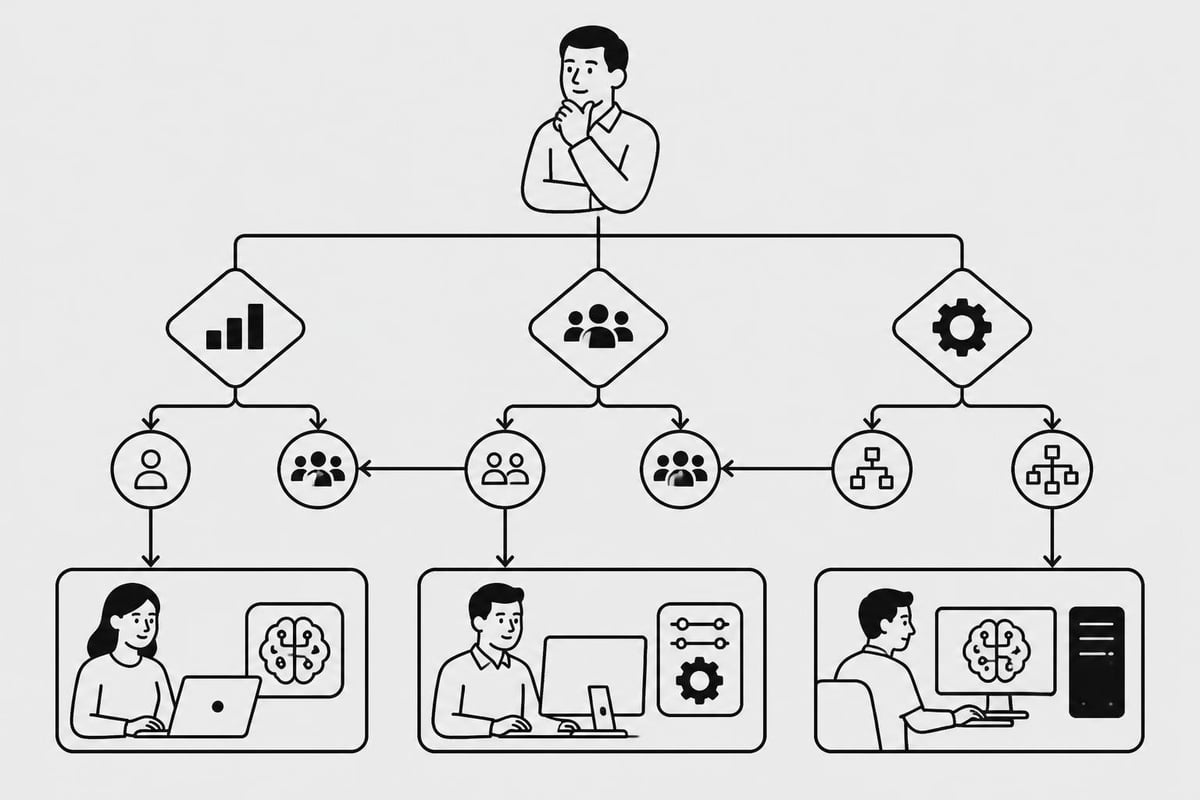
Generic AI features embedded in standard sales tools solve common problems but rarely address your specific sales motion. B2B teams selling complex enterprise solutions face different challenges than high-velocity inside sales organizations. Your industry, deal complexity, sales cycle length, and buyer personas all influence which AI applications deliver measurable returns.
This is where custom-built AI becomes relevant. Rather than forcing your process into a vendor's predetermined AI workflow, custom solutions adapt to how your team actually operates. They integrate with your existing data sources, respect your qualification criteria, and align with your specific sales methodology.
The Hidden Cost of Tool Sprawl
Every additional platform in your stack carries costs beyond the subscription fee. There's the implementation effort, training requirements, ongoing maintenance, and the cognitive burden of context-switching between systems. Forbes research on sales tool management demonstrates that sales representatives lose an average of 90 minutes per day simply navigating between different tools.
Data fragmentation compounds these challenges. When information lives across multiple systems, sales representatives make decisions with incomplete context. A conversation recorded in one tool doesn't automatically inform the account strategy documented elsewhere. Updates in the CRM don't trigger relevant workflows in the engagement platform.
Common symptoms of tool sprawl include:
Representatives maintaining personal spreadsheets because the official systems don't talk to each other
Duplicate data entry across multiple platforms for the same activity
Conflicting reports from different tools using different data sources
New hire ramp time dominated by learning software rather than learning to sell
Technology becoming a source of friction rather than acceleration
The solution isn't necessarily fewer tools, but rather better integration and more thoughtful selection. Each platform should either provide unique capabilities unavailable elsewhere or deliver sufficient value to justify its standalone existence.
Consolidation Strategies That Work
Effective consolidation starts with a thorough audit of your current state. Document every tool in use, who uses it, what they use it for, and what would break if you removed it. Understanding how to audit your sales tech stack reveals redundancies, identifies gaps, and surfaces opportunities for consolidation.
The Assessment Framework
Evaluate each tool across four dimensions: utilization, integration, value delivery, and cost. Utilization measures whether your team actually uses the platform consistently. Integration assesses how well it connects with other systems. Value delivery examines whether it produces measurable business outcomes. Cost includes not just the subscription but the total cost of ownership.
Tools scoring high on utilization and value but low on integration become prime candidates for deeper integration work. Those with low utilization regardless of features should be eliminated. Platforms delivering minimal value despite high costs need replacement or renegotiation.
Evaluation Criteria | High Score Indicators | Low Score Indicators | Action |
|---|---|---|---|
Utilization | Daily active users >80% | Active users <40% | Eliminate or retrain |
Integration | Bidirectional sync, automated workflows | Manual exports/imports | Enhance or replace |
Value Delivery | Measurable revenue impact | No clear ROI | Justify or remove |
Total Cost | Clear ROI vs. investment | High cost, unclear benefit | Renegotiate or cancel |
The consolidation process itself requires careful sequencing. Start with the easiest wins, typically eliminating unused tools or merging redundant capabilities. Build momentum before tackling complex platform replacements that require significant change management.
Designing Systems Instead of Collecting Tools
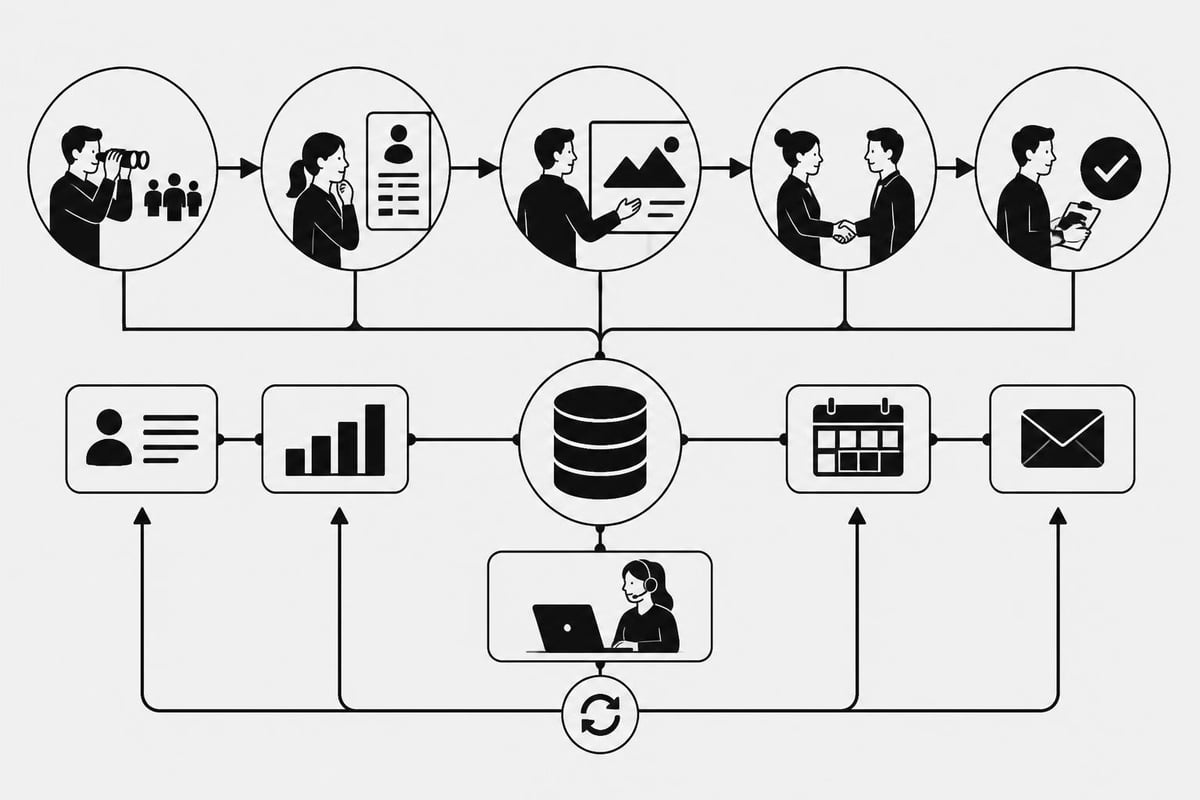
The fundamental shift required is thinking in terms of systems rather than tools. A system encompasses the tools themselves, the data flowing between them, the workflows they enable, and the human processes they support. According to Salesforce's sales leadership research, high-performing sales organizations design their technology around their sales methodology rather than adapting their methodology to fit available tools.
This systems thinking approach asks different questions. Instead of "what's the best sales engagement platform," you ask "what engagement workflows will move prospects through our pipeline most effectively, and what technology best enables those workflows?" The tool becomes a means to an end rather than the end itself.
Implementation Principles
Successful system design follows several core principles. First, data flows in one direction wherever possible. Avoid circular dependencies where System A depends on System B which depends on System A. Second, establish a single source of truth for each data type. Contact information lives in one place and propagates from there. Third, automate the routine to free up capacity for the exceptional.
Fourth, build with your actual sales process in mind. If your team doesn't do high-volume cold calling, a sophisticated power dialer adds complexity without value. If account-based selling drives your revenue, invest in tools that support research and multi-threading. Fifth, prioritize adoption over features. A simpler system used consistently outperforms a sophisticated one used sporadically.
Measurement and Continuous Improvement
Technology decisions should be data-driven, but tracking the right metrics matters more than tracking many metrics. Revenue per representative, win rate, average deal size, and sales cycle length provide clearer signals than platform-specific vanity metrics.
Key performance indicators for sales tools:
Time to productivity for new hires (does technology accelerate or slow onboarding)
Activities per day (are tools enabling more customer interactions)
Pipeline velocity (how quickly deals move through stages)
Forecast accuracy (does intelligence improve predictions)
Representative satisfaction (is technology helping or hindering)
Establish baselines before implementing new tools and measure changes over meaningful time periods. Quick wins matter, but sustainable improvement is the goal. Bain & Company's research on sales effectiveness shows that the most successful technology implementations measure impact across quarters rather than weeks.
Regular review cycles keep your stack aligned with evolving needs. Quarterly assessments identify underutilized tools, emerging gaps, and opportunities for optimization. Annual strategic reviews evaluate whether your overall architecture still serves your go-to-market strategy.
The Build vs. Buy Decision
Certain capabilities are best purchased as commercial software. CRMs, communication tools, and standard analytics fall into this category. The market offers mature solutions with established best practices and extensive integration ecosystems. Building these from scratch rarely makes sense.
Other capabilities benefit from customization. Unique workflows specific to your industry, proprietary data models, specialized AI applications, and deeply integrated automation often require custom development. The question isn't build versus buy in absolute terms, but rather which approach best addresses each specific need.
For B2B sales teams, custom solutions make sense when your sales motion differs significantly from standard patterns, when existing tools force workarounds that create friction, or when integration requirements exceed the capabilities of available platforms. Organizations pursuing custom-built AI typically have complex enough operations that off-the-shelf solutions leave significant value on the table.
The hybrid approach combines commercial platforms for commodity functions with custom development for differentiated capabilities. Your CRM might be Salesforce or HubSpot, but the AI layer predicting which accounts to prioritize or the workflow routing qualified leads to the right representative reflects your unique process.
Vendor Selection and Negotiation
Choosing the right vendors involves more than feature comparison. Evaluate the company's financial stability, product roadmap alignment with your needs, quality of customer support, and integration ecosystem. A tool with 80% of the features from a stable vendor often beats a platform with 100% of the features from a company that might not exist in two years.
Negotiation extends beyond price. Contract flexibility, data portability, API access, and support SLAs all impact total cost of ownership. WalkMe's comprehensive sales tools guide emphasizes that the best vendor relationships involve alignment around outcomes rather than just transactions.
Lock-in is a real consideration. Understand how difficult it is to export your data and migrate to alternatives. Vendor consolidation has accelerated in recent years, and acquisitions frequently degrade product quality or eliminate features. Building your strategy around easily replaceable components provides optionality.
Integration Architecture Considerations
Modern sales stacks rely on integration to function cohesively. APIs connect systems, middleware platforms orchestrate data flows, and iPaaS solutions provide low-code integration capabilities. The architecture matters as much as the individual components.
Point-to-point integrations work for simple stacks but become unmaintainable at scale. When you have six tools, fifteen potential integration points exist. At ten tools, that number climbs to forty-five. Hub-and-spoke architectures where everything connects through a central platform simplify maintenance but create single points of failure.
Integration approaches by complexity:
Simple (2-3 tools): Native integrations between platforms
Moderate (4-6 tools): Hub-and-spoke with CRM as the center
Complex (7+ tools): iPaaS or custom integration layer
Data quality at the integration points determines system reliability. Garbage in, garbage out applies at scale. Establish data governance policies defining field mappings, validation rules, and conflict resolution before implementing integrations.
Training and Adoption Strategies
The best technology in the world delivers zero value if your team doesn't use it. Change management and training determine whether implementations succeed or fail. Adults learn by doing, so sandbox environments and hands-on practice beat PowerPoint presentations.
Role-based training recognizes that SDRs, account executives, and sales managers interact with tools differently. Customize training to what each role needs to know rather than presenting every feature to everyone. Just-in-time learning through embedded guides and contextual help supports ongoing adoption better than one-time training events.
Champions within the sales organization drive grassroots adoption more effectively than top-down mandates. Identify respected representatives who grasp the new system quickly and empower them to support their peers. Make the first 30 days post-implementation intensive with frequent check-ins and rapid issue resolution.
The proliferation of sales tools presents both opportunity and risk for B2B organizations. The right technology, thoughtfully integrated into a cohesive system, accelerates revenue and empowers sales professionals. The wrong tools, poorly implemented and disconnected from actual workflows, create drag and frustration. Success requires moving beyond tool collection toward system design, consolidating where possible, and building custom solutions where differentiation matters. If your sales organization struggles with tool sprawl or fragmented systems, erakraft inc. specializes in consolidating existing platforms into unified systems that enhance efficiency and help your team focus on closing deals rather than managing software.