
B2B Tech Sales: Building Systems That Scale in 2026
Master b2b tech sales with AI-powered systems that eliminate friction, accelerate deals, and help teams focus on revenue, not software management.
published
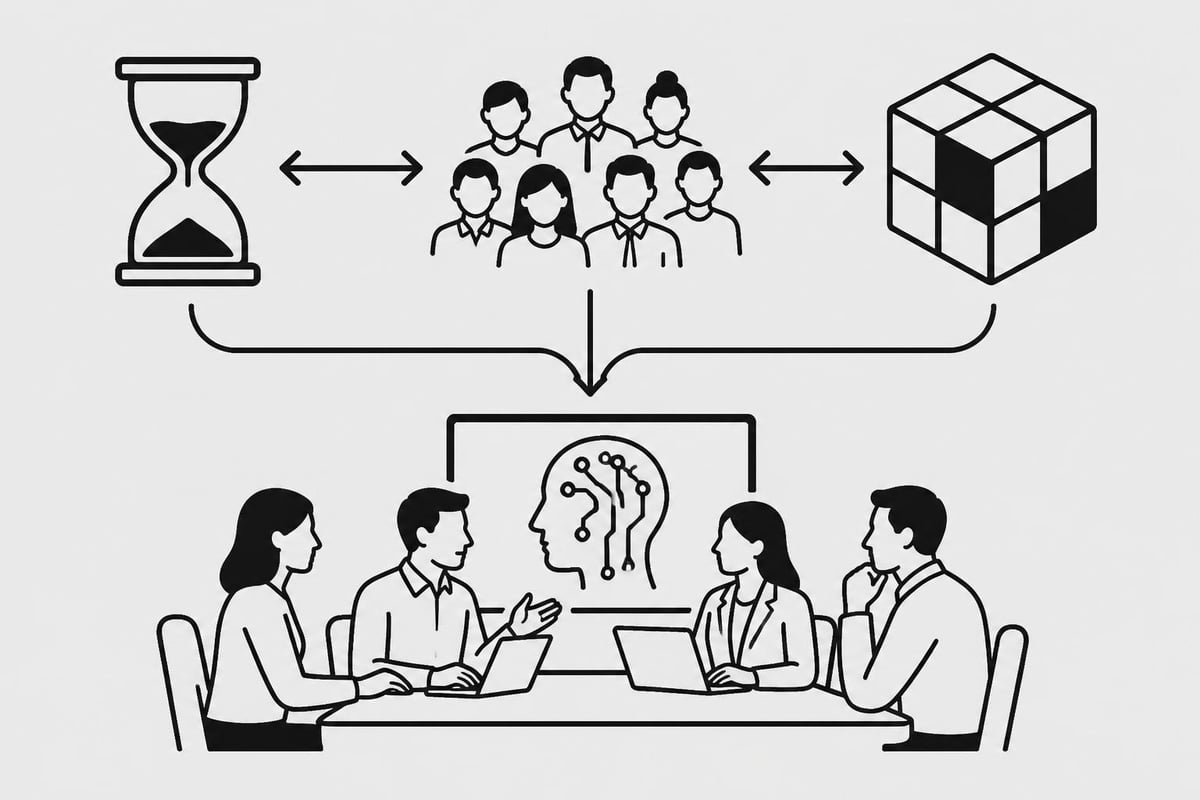
The landscape of b2b tech sales has fundamentally shifted over the past few years, driven by longer buying cycles, more complex decision-making units, and an overwhelming proliferation of sales technology. Sales teams now navigate an average of 8-12 tools daily while managing prospects who conduct 70% of their research independently before ever engaging with a representative. This creates a paradox where technology intended to accelerate sales actually creates friction, slowing momentum and diluting focus from what matters most: closing deals. Success in this environment demands a strategic approach to systems design, not simply accumulating more software.
The Current State of B2B Tech Sales
B2B technology sales in 2026 operates under fundamentally different conditions than even two years ago. The state of enterprise sales reveals that sales cycles have extended by 22-30% across most technology categories, with decision-making units now averaging 7-9 stakeholders per deal. This complexity compounds when combined with budget scrutiny and ROI pressure that forces prospects to evaluate every investment against measurable outcomes.
Economic Pressures Reshaping Sales Approaches
Economic uncertainty continues to dominate purchasing decisions across enterprise technology. Buyers demand proof of concept, detailed implementation roadmaps, and clear paths to value before committing resources. Sales teams face increased pressure to demonstrate immediate impact while navigating organizations with frozen headcount and reduced discretionary spending.
This environment rewards sales operations that can move quickly, provide comprehensive data to support business cases, and maintain consistent engagement across extended timelines. Teams relying on manual processes or fragmented systems struggle to maintain the velocity required to compete effectively.
Technology Stack Bloat and Its Impact
The average B2B sales organization now uses 10+ distinct platforms to manage their sales process. CRM systems, engagement platforms, email sequencers, video tools, proposal software, contract management, analytics dashboards, and conversation intelligence tools all promise to enhance productivity. Instead, they create a fragmented workflow where representatives spend 64% of their time on non-selling activities.
Common Sales Tools | Primary Function | Typical Time Investment |
|---|---|---|
CRM Platform | Contact and pipeline management | 8-12 hours/week |
Email Sequencer | Automated outreach | 3-5 hours/week |
Video Platform | Demos and presentations | 2-4 hours/week |
Proposal Software | Quote generation | 4-6 hours/week |
Analytics Dashboard | Performance tracking | 2-3 hours/week |
This fragmentation creates several critical problems for b2b tech sales teams:
Data silos prevent comprehensive visibility into customer interactions
Context switching between platforms reduces focus and increases errors
Integration failures create gaps where opportunities fall through
Onboarding complexity extends ramp time for new representatives
Reporting inconsistencies obscure actual performance metrics
Many organizations recognize this problem but struggle to address it systematically. Understanding how to audit your sales tech stack provides a starting point for identifying where tools add value versus where they create friction.
The AI Revolution in Sales Systems
Artificial intelligence has moved from experimental to essential in b2b tech sales, though not in the ways many vendors initially predicted. The most impactful applications don't replace sales professionals but rather eliminate repetitive tasks and surface insights that would otherwise require hours of manual analysis. AI adoption is finally driving ROI for teams that implement it strategically rather than opportunistically.
Practical AI Applications That Drive Results
Successful AI implementation in b2b tech sales focuses on specific, measurable outcomes rather than broad automation promises. The most effective use cases center on augmenting human decision-making and eliminating low-value administrative work.
Lead scoring and prioritization represents one of the highest-impact applications. AI models trained on historical win/loss data can identify buying signals that human representatives might miss, ensuring teams focus effort where probability of conversion justifies the investment. This becomes particularly valuable as inbound volumes increase and manual qualification becomes unsustainable.
Conversation intelligence transforms how teams learn from customer interactions. Rather than relying on individual representatives to recall and report key details, AI systems analyze calls and meetings to identify objections, competitive mentions, buying signals, and coaching opportunities. This creates a knowledge base that benefits the entire organization.
Personalization at scale allows representatives to maintain relevance across large prospect pools without sacrificing individual attention. AI systems can generate customized outreach, tailor content recommendations, and suggest talking points based on prospect behavior, industry trends, and past successful interactions with similar buyers.
The key distinction between effective and ineffective AI implementation lies in integration with existing workflows. Tools that require representatives to learn new interfaces or manually transfer data between systems fail to gain adoption. Solutions that work within established processes and eliminate steps rather than adding them deliver measurable impact.
Building Sales Systems That Eliminate Friction
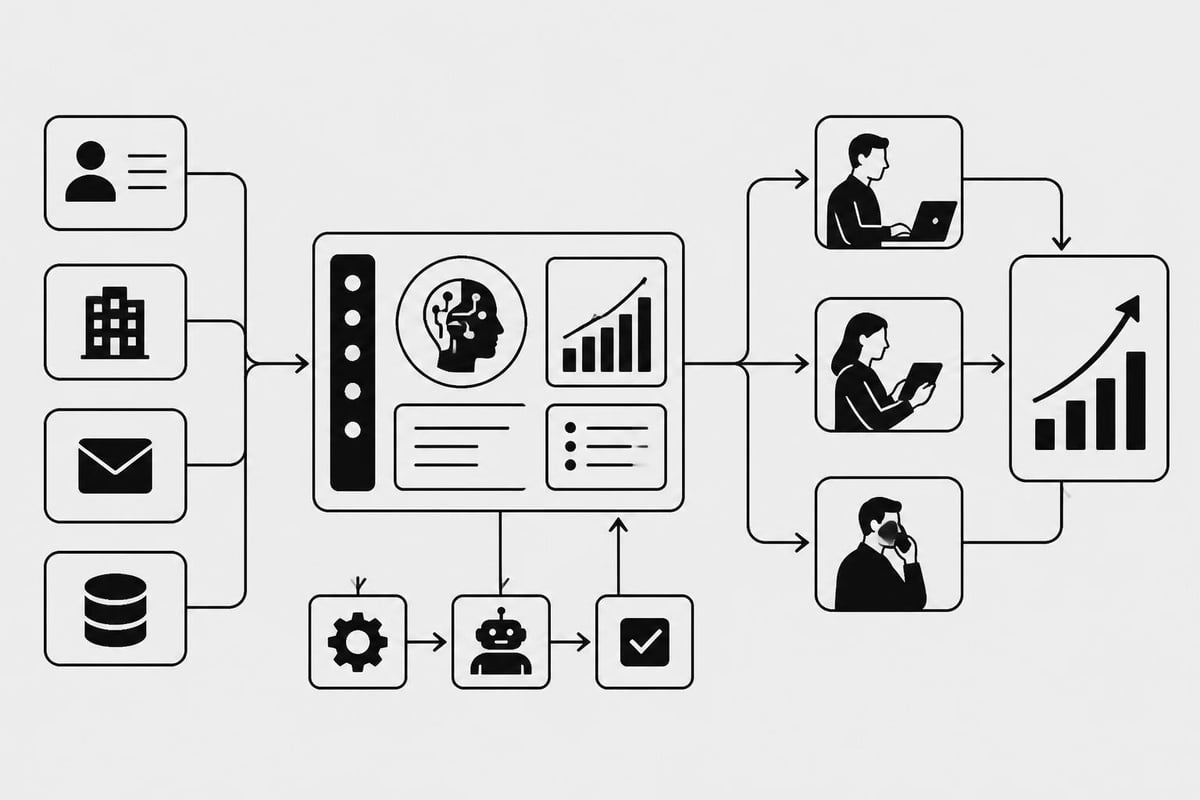
The most successful b2b tech sales organizations in 2026 share a common characteristic: they've moved beyond tool accumulation to systems thinking. Rather than evaluating each platform in isolation, they design integrated workflows where data flows seamlessly and representatives focus on high-value activities.
Core Principles of Effective Sales Systems
Unified data foundation ensures every tool and team member works from the same source of truth. Customer interactions, engagement history, purchase signals, and relationship context live in a central repository accessible across the organization. This eliminates duplicate data entry, reduces errors, and provides complete visibility into account status.
Progressive automation identifies repetitive, rule-based tasks and systematically removes them from human workflows. This includes email follow-ups, meeting scheduling, data enrichment, task creation, and routine reporting. Each automation should free representatives to spend more time on strategic selling activities.
Intelligent routing ensures opportunities reach the right representative at the right time based on specialization, capacity, relationship history, and likelihood of success. This prevents qualified prospects from languishing due to arbitrary assignment rules while balancing workload across the team.
A comprehensive Sales System approach addresses these elements holistically rather than layering point solutions that create new integration challenges.
Adapting to Changing Buyer Behavior
B2B technology buyers in 2026 conduct significantly more research independently before engaging sales teams. Future trends in B2B tech sales indicate this self-service preference will only intensify, particularly among younger decision-makers who grew up with on-demand digital experiences.
This shift fundamentally changes the sales representative's role. Rather than educating prospects on basic product capabilities, representatives now focus on:
Understanding specific business context and unique requirements
Demonstrating how solutions integrate into existing workflows
Navigating organizational politics and building consensus
Quantifying expected outcomes and building business cases
Accelerating internal approval processes
Content and Enablement Requirements
Sales teams need instant access to relevant content that addresses specific prospect questions and concerns. Generic presentations and product overviews no longer suffice. Representatives require case studies from similar industries, technical documentation for specific integration scenarios, ROI calculators calibrated to prospect parameters, and testimonials from comparable organizations.
AI-powered content recommendation engines can surface the right assets at the right moment based on deal stage, industry, prospect role, and previous engagement patterns. This eliminates time spent searching for materials while ensuring consistency in how value propositions are communicated.
Measuring What Matters in Modern Sales
Traditional b2b tech sales metrics like call volume and email sends measure activity rather than outcomes. Modern sales organizations track leading indicators that predict revenue performance and identify areas requiring intervention before opportunities are lost.
Metric Category | Key Indicators | Why It Matters |
|---|---|---|
Pipeline Health | Stage velocity, conversion rates, deal aging | Identifies bottlenecks before they impact revenue |
Engagement Quality | Response rates, meeting attendance, content consumption | Predicts prospect interest and readiness to buy |
Rep Effectiveness | Activities per closed deal, average deal size, win rate | Highlights coaching opportunities and best practices |
System Performance | Tool adoption, data quality, automation success rate | Ensures technology delivers promised value |
Pipeline health metrics reveal whether opportunities are progressing at expected rates or stalling in particular stages. Deals that remain in discovery for 45+ days or proposals that sit for 30+ days without advancement signal issues that require immediate attention. Tracking these patterns across the entire pipeline helps sales leaders allocate coaching resources and identify systemic problems.
Engagement quality metrics provide early warning when prospect interest wanes. Declining email response rates, postponed meetings, or reduced time spent with content indicate competitive pressure or internal priority shifts. Monitoring these signals allows teams to intervene proactively rather than discovering problems during quarterly pipeline reviews.
Overcoming Common Implementation Challenges
Transforming b2b tech sales operations from fragmented tools to integrated systems presents several predictable obstacles. Anticipating these challenges and planning mitigation strategies significantly increases success probability.
Change Management and Adoption
Sales representatives develop strong preferences for familiar tools and workflows, even when those processes are inefficient. Introducing new systems without adequate preparation creates resistance that undermines implementation regardless of technical quality.
Successful change management requires:
Executive sponsorship that reinforces the importance of adoption
Representative involvement in design decisions and testing phases
Comprehensive training that addresses specific use cases rather than generic overviews
Quick wins that demonstrate immediate value to individual users
Continuous support that addresses questions and refines workflows based on feedback
Organizations that treat systems implementation purely as a technical project typically see adoption rates below 60%. Those that invest in change management and treat it as an organizational transformation achieve 85%+ adoption within 90 days.
Data Migration and Quality
Legacy systems often contain years of accumulated customer data with inconsistent formatting, duplicate records, incomplete information, and outdated details. Migrating this data into new systems without cleaning and standardization creates problems that persist indefinitely.
Effective data migration follows a structured process:
Audit existing data to identify quality issues and prioritize critical fields
Establish standards for formatting, required fields, and validation rules
Clean systematically using automated tools supplemented by manual review
Migrate incrementally starting with highest-value accounts and recent data
Validate thoroughly comparing source and destination systems for accuracy
This process requires dedicated resources and realistic timelines. Organizations that compress migration schedules to meet arbitrary deadlines typically experience data quality issues that reduce system effectiveness and erode user confidence.
The Role of Human Expertise in AI-Powered Sales
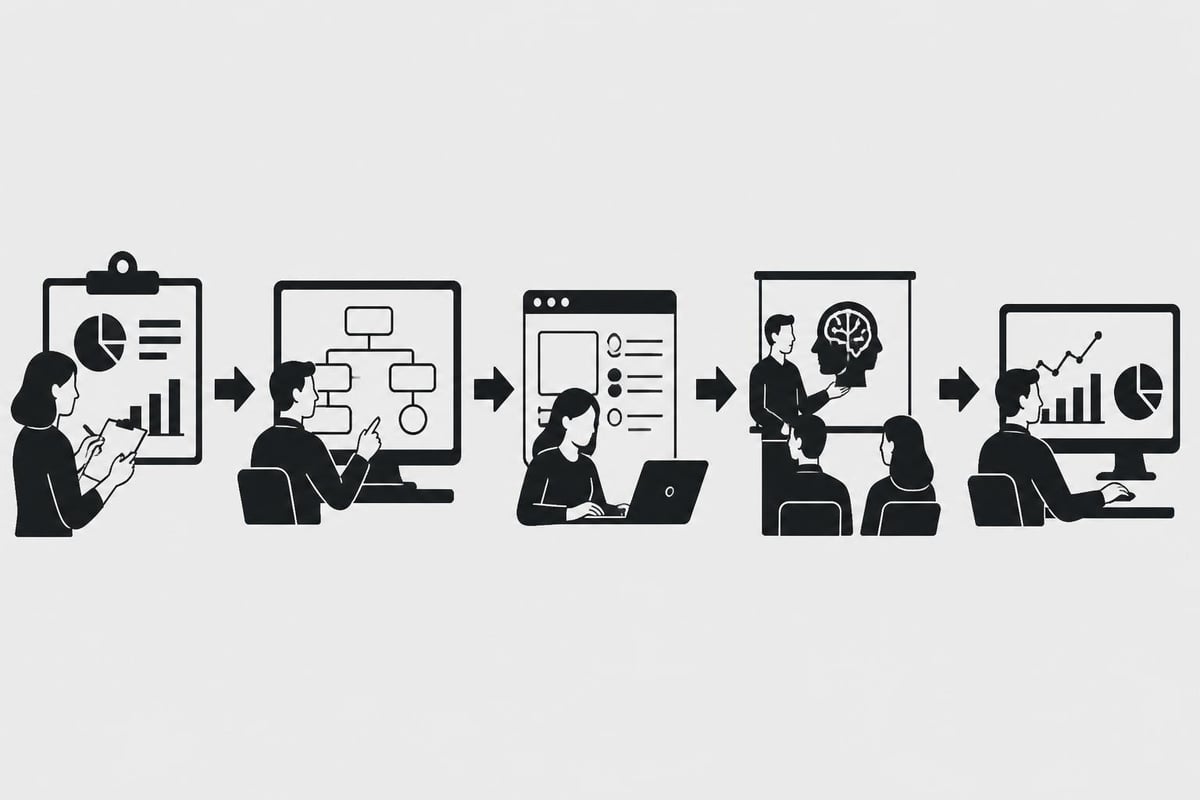
Despite advances in automation and artificial intelligence, b2b tech sales remains fundamentally relationship-driven. Technology amplifies human capabilities rather than replacing the judgment, creativity, and empathy that close complex deals. Understanding where AI actually moves the needle helps organizations invest in the right capabilities.
Skills That Matter More Than Ever
As routine tasks become automated, several human skills increase in importance:
Strategic questioning uncovers prospect needs that aren't explicitly stated. While AI can suggest questions based on successful past interactions, representatives must adapt in real-time based on prospect responses, body language, and conversational nuance.
Relationship building creates trust and preference that transcends product features and pricing. Buyers choose vendors they believe will support their success throughout implementation and beyond. This confidence comes from human connection that no technology can replicate.
Creative problem-solving addresses unique prospect situations that don't fit standard solutions. Representatives who can envision custom approaches, navigate technical constraints, and assemble resources creatively deliver differentiated value that justifies premium pricing.
Organizational navigation helps prospects build internal consensus and overcome political obstacles. Understanding stakeholder motivations, identifying champions, and addressing concerns from various functional areas requires emotional intelligence that remains uniquely human.
Future Considerations for Sales Leaders
The trajectory of b2b tech sales points toward continued integration of AI capabilities, increased buyer expectations for personalized experiences, and growing importance of systems thinking over tool accumulation. B2B tech trends for 2026 highlight several areas requiring leadership attention.
Sales leaders must balance competing priorities: investing in technology that enhances capabilities while avoiding the bloat that reduces effectiveness, maintaining human connection while scaling operations efficiently, and demonstrating ROI while funding long-term capability development.
Building Sustainable Competitive Advantage
Temporary advantages from specific tools or tactics erode quickly as competitors implement similar approaches. Sustainable differentiation comes from organizational capabilities that are difficult to replicate: integrated systems that compound efficiency gains, knowledge bases that capture institutional learning, and cultures that attract and retain top talent.
Organizations building these capabilities systematically outperform those chasing the latest sales technology trends. The discipline required to audit existing systems, eliminate what doesn't work, and optimize before adding new tools separates high-performing sales organizations from those perpetually searching for silver-bullet solutions.
This systematic approach benefits from external perspective and specialized expertise. A focused Sales Function Audit provides objective assessment of where tools, workflows, and processes support or hinder sales effectiveness, creating a roadmap for improvement based on actual performance data rather than assumptions.
Integration Strategies That Work
Successful b2b tech sales operations in 2026 don't attempt to replace every existing tool simultaneously. They identify high-impact integration opportunities where connecting systems eliminates manual work, improves data quality, or accelerates decision-making.
API-first architecture enables flexibility as requirements evolve. Rather than relying on pre-built integrations that may not address specific workflows, organizations investing in custom integration capabilities can adapt quickly to changing needs.
Workflow automation platforms like Zapier or Make provide no-code options for connecting tools, though they introduce dependencies and potential failure points. Evaluating whether these platforms simplify or complicate operations requires understanding specific use cases and long-term scalability requirements.
Custom integration development delivers precisely tailored solutions but requires ongoing maintenance and technical expertise. This approach makes sense for high-volume workflows where elimination of manual steps delivers measurable time savings and error reduction.
The optimal integration strategy depends on technical resources, budget constraints, timeline requirements, and complexity of workflows being addressed. Most organizations benefit from a hybrid approach using different integration methods for different use cases.
The shift toward systems thinking in b2b tech sales represents a fundamental evolution from tool accumulation to integrated operations that eliminate friction and focus teams on revenue-generating activities. Organizations that master this transition gain compounding advantages in efficiency, data quality, and representative effectiveness that competitors struggle to match. If your sales operation is drowning in tools while struggling to hit targets, erakraft inc. specializes in building custom sales systems powered by AI that consolidate fragmented platforms, eliminate administrative burden, and help teams focus on closing deals rather than managing software.