
Teams Audit: Securing & Optimizing Your Collaboration
Learn how to conduct a comprehensive teams audit to enhance security, compliance, and collaboration efficiency for your B2B sales organization.
published
Organizations relying on Microsoft Teams for collaboration face mounting pressure to maintain security, ensure compliance, and optimize productivity. A teams audit provides the systematic framework needed to review user activities, identify security vulnerabilities, monitor compliance requirements, and streamline workflows. For B2B sales teams especially, where sensitive client data and strategic conversations flow through digital channels daily, understanding how to properly audit your Teams environment becomes critical. This comprehensive examination of audit logs, user permissions, app integrations, and communication patterns enables organizations to protect their data while maximizing the platform's effectiveness for revenue-generating activities.
Understanding the Foundation of a Teams Audit
A teams audit encompasses multiple layers of analysis, from technical security reviews to behavioral pattern assessments. At its core, this process involves examining audit logs that Microsoft automatically generates for every significant action within the platform. These logs capture user sign-ins, file accesses, meeting participations, message deletions, and administrative changes that collectively paint a complete picture of platform usage.
The primary components of an effective teams audit include:
Security event monitoring and threat detection
Compliance verification against industry regulations
User activity analysis and productivity patterns
Application and integration reviews
Data governance and retention policy validation
Guest access and external sharing controls
Organizations must recognize that Microsoft Teams security features extend far beyond basic password protection. The platform maintains detailed records of every interaction, creating an audit trail that supports forensic investigations, compliance reporting, and operational optimization. However, accessing and interpreting this data requires understanding where information resides and how to extract actionable insights.
Accessing and Interpreting Audit Logs
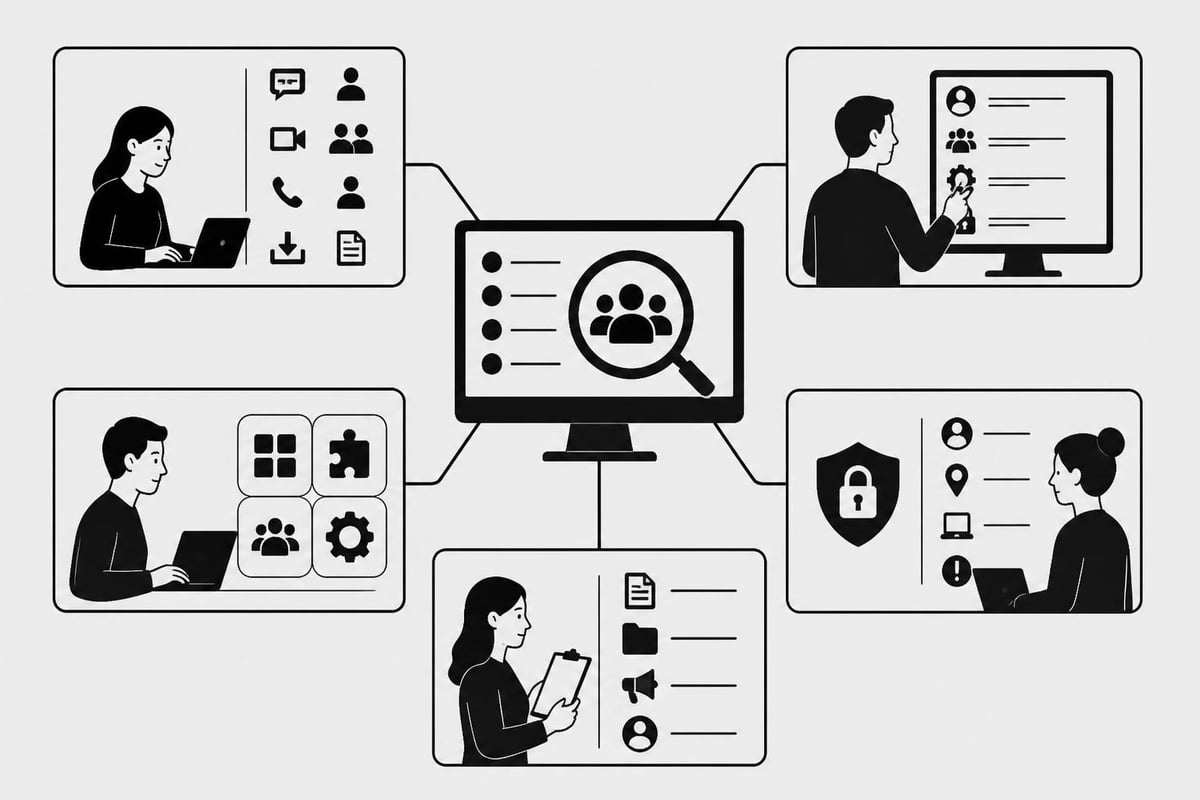
Microsoft provides audit log access through the Security & Compliance Center, where administrators can search for specific Teams events using various filters and parameters. The audit log search interface allows queries by date range, user, activity type, and specific Teams-related actions. Understanding how to navigate this interface efficiently separates superficial audits from comprehensive security reviews.
The audit logs capture activities across several categories that directly impact sales operations. When a sales representative shares a proposal document with a prospect, downloads a contract template, or grants external access to a client portal, these actions generate audit entries. For sales leaders conducting a teams audit, these entries reveal not just compliance adherence but also workflow efficiency and potential bottlenecks.
Audit Category | Key Activities Logged | Sales Team Relevance |
|---|---|---|
User Actions | File access, sharing, deletion | Track document workflows and client data handling |
Team Management | Member additions, role changes | Monitor team structure and access control |
Meeting Activities | Recordings, transcriptions, attendance | Analyze client engagement and internal collaboration |
App Management | App installations, permissions | Review third-party tool integrations and security |
Channel Operations | Creation, deletion, settings changes | Understand collaboration patterns and information architecture |
Establishing Audit Frequency and Scope
Determining how often to conduct a teams audit depends on your organization's risk profile, regulatory requirements, and operational complexity. Financial services firms subject to strict compliance mandates might perform weekly automated reviews with monthly comprehensive audits. Meanwhile, mid-market B2B companies might establish quarterly review cycles with continuous monitoring for critical security events.
Scope definition matters equally. A comprehensive teams audit examines every aspect of platform usage, while targeted audits focus on specific concerns like guest access policies or sensitive data exposure. Sales organizations frequently benefit from workflow-specific audits that trace the customer journey through Teams interactions, identifying where collaboration enhances or impedes deal progression.
Security and Compliance Considerations
Security vulnerabilities within Teams can expose confidential sales strategies, competitive intelligence, and client data to unauthorized access. A thorough teams audit identifies these risks before they materialize into breaches. Guest access security concerns particularly warrant attention, as sales teams frequently collaborate with external partners, prospects, and clients who require temporary platform access.
The security and compliance framework for Teams encompasses data encryption, conditional access policies, multi-factor authentication, and data loss prevention capabilities. During a teams audit, administrators should verify that these controls function as intended and align with organizational security policies. Configuration drift, where settings gradually deviate from approved baselines, represents a common finding in audit reviews.
Critical security checkpoints include:
External sharing permissions - Review who can invite guests and share files externally
Data loss prevention rules - Verify policies prevent sensitive information leakage
Retention policies - Confirm message and file retention aligns with legal requirements
Conditional access - Check that location and device-based restrictions work correctly
Application permissions - Audit third-party apps for excessive data access requests
Industry-Specific Compliance Requirements
Different industries face unique compliance obligations that directly impact how organizations conduct a teams audit. Healthcare organizations must ensure HIPAA compliance when discussing patient information, while financial services firms navigate SEC and FINRA requirements. Microsoft Teams supports various compliance frameworks through features like legal hold, eDiscovery, and advanced audit capabilities.
For B2B sales teams, compliance often centers on data privacy regulations like GDPR or CCPA, which govern how customer information is collected, stored, and processed. A teams audit must verify that sales representatives handle prospect data appropriately, obtain necessary consents, and respect data subject rights. Audit logs provide evidence of compliance during regulatory examinations or legal proceedings.
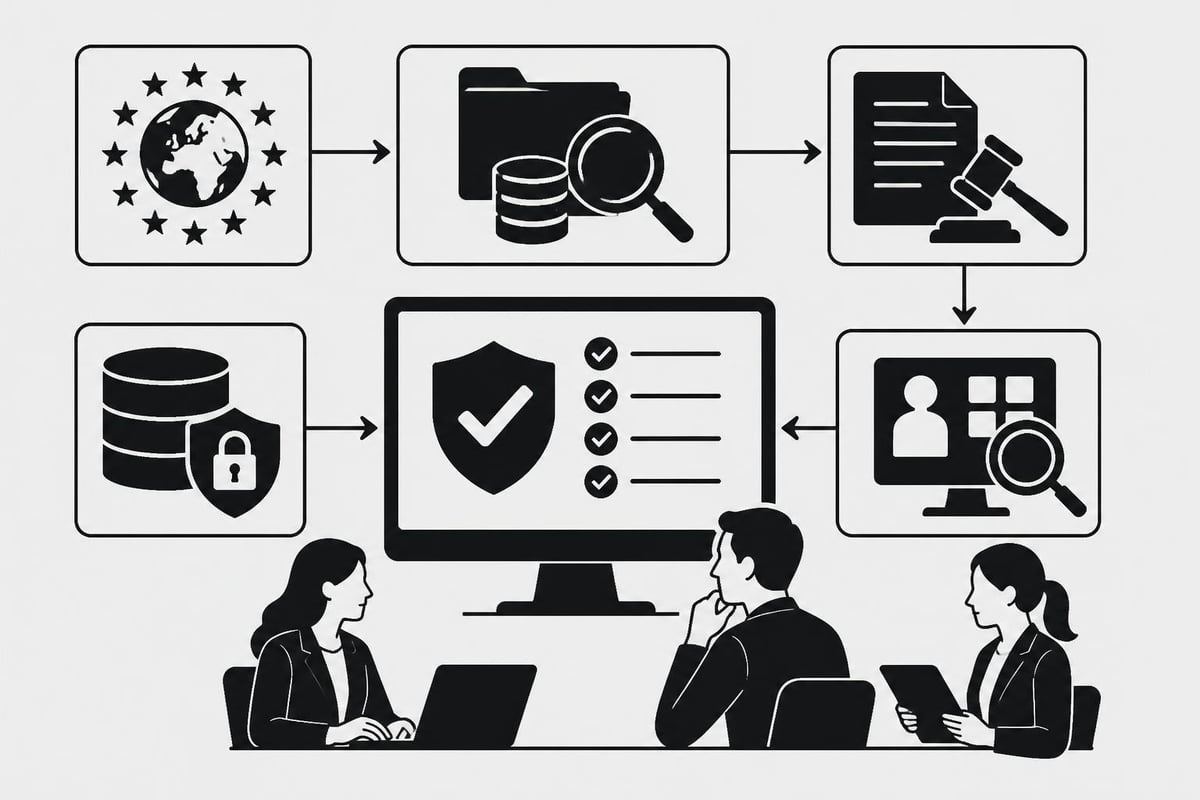
When conducting a sales function audit, examining how Teams supports or hinders compliance becomes essential. Sales leaders need visibility into whether their teams follow approved processes, use compliant communication channels, and maintain proper documentation. Audit findings often reveal shadow IT practices where representatives circumvent approved tools, creating compliance gaps.
Application and Integration Management
Third-party applications integrated with Teams create functionality extensions but also introduce security and performance considerations. Monitoring app management activities through audit logs reveals which applications users install, what permissions they grant, and how frequently they utilize these tools. This visibility enables organizations to identify redundant applications, security risks, and opportunities for consolidation.
Sales teams typically integrate CRM platforms, proposal software, e-signature tools, and analytics dashboards with Teams. Each integration creates data flow pathways that require security review. A comprehensive teams audit examines whether these integrations maintain appropriate security boundaries, transmit data securely, and comply with organizational policies.
Application audit priorities include:
Cataloging all installed applications and their permissions
Reviewing data access patterns and identifying excessive privileges
Validating vendor security certifications and compliance
Assessing application usage rates and ROI
Identifying overlapping functionality across multiple tools
The proliferation of sales tools creates complexity that reduces rather than enhances productivity. When conducting a teams audit focused on sales operations, organizations often discover that representatives toggle between eight to twelve different applications daily. This tool sprawl fragments workflows, duplicates data entry, and obscures performance visibility. Understanding which sales systems truly add value versus which create friction becomes clearer through usage data extracted during audits.
Data Governance and Information Protection
Information protection capabilities within Teams enable organizations to classify, label, and control sensitive information throughout its lifecycle. A teams audit should verify that sensitivity labels apply correctly to confidential sales data, encryption protects data at rest and in transit, and retention policies preserve or delete information according to schedule.
Sales teams handle multiple data types with varying sensitivity levels. Prospect contact information, preliminary proposals, and general market research require different protection measures than signed contracts, financial forecasts, or acquisition plans. Audit processes should confirm that information classification aligns with actual sensitivity and that access controls match business requirements.
Data Type | Recommended Classification | Typical Retention | Access Control |
|---|---|---|---|
Prospect Lists | Confidential | 3 years | Sales team only |
Proposals | Highly Confidential | 7 years | Deal team + management |
Client Conversations | Confidential | 5 years | Assigned rep + manager |
Contract Drafts | Highly Confidential | 10 years | Legal + deal team |
Sales Playbooks | Internal Use | Indefinite | Sales organization |
Operational Optimization Through Audit Insights
Beyond security and compliance, a teams audit reveals operational inefficiencies that impact sales performance. Analyzing meeting patterns might show that sales representatives spend excessive time in internal coordination meetings rather than client-facing activities. Channel proliferation analysis might uncover that teams create redundant channels, fragmenting information and requiring representatives to monitor multiple streams.
Usage analytics extracted during audits quantify how teams actually work versus how leaders assume they work. Perhaps the expensive proposal automation tool integrated with Teams sees minimal adoption while representatives continue creating proposals manually. Maybe the training channel established for onboarding new hires contains outdated materials that confuse rather than educate. These insights drive data-informed decisions about where to invest, what to eliminate, and how to restructure workflows.
Operational metrics to track during a teams audit:
Average daily active users and engagement trends
Channel creation rate and archive frequency
Meeting duration, frequency, and attendance patterns
File sharing activity and collaboration velocity
Response time patterns and availability metrics
External collaboration frequency and partner engagement
For sales organizations, these operational insights directly correlate with revenue outcomes. Teams that collaborate efficiently close deals faster. Representatives who access information quickly respond to prospects more effectively. Managers who monitor activity patterns identify coaching opportunities before performance problems escalate.
Workflow Analysis and Process Improvement
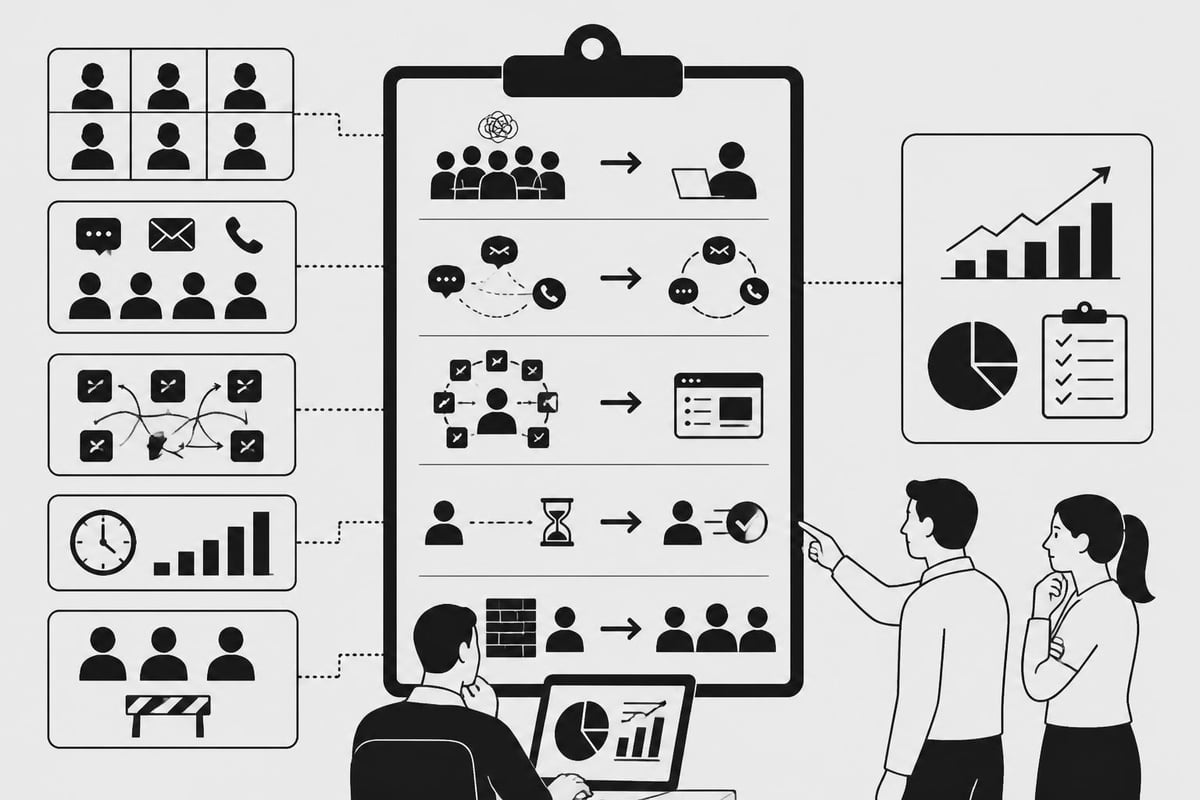
Examining how sales processes flow through Teams illuminates opportunities for AI-powered automation and intelligent assistance. A detailed teams audit traces the customer journey from initial contact through contract signature, identifying every touchpoint, handoff, and delay. This process mapping reveals where custom AI solutions could eliminate manual tasks, accelerate information retrieval, or enhance decision-making.
Consider a typical enterprise sales cycle where initial prospect conversations occur in Teams, notes transfer to the CRM, proposals route through multiple approvers, and contract negotiations happen via email. A teams audit might reveal that sales representatives spend hours weekly copying information between systems, searching for approved content, and tracking approval status. These friction points represent automation opportunities that directly impact sales velocity.
The most effective sales teams don't just use Teams as a communication platform but as the central nervous system for their entire revenue operation. However, achieving this integration requires understanding current state workflows, identifying gaps, and implementing targeted improvements. Audit findings provide the empirical foundation for these transformation initiatives.
Advanced Audit Techniques and Tools
Organizations seeking deeper audit insights can leverage advanced methodologies beyond basic log review. Forensic analysis techniques for Teams enable detailed investigation of user activities, recovering deleted messages, tracing file access chains, and reconstructing event timelines. These capabilities prove valuable during security incident responses, internal investigations, or legal discovery processes.
Blockchain-based audit systems, as outlined in research on secure audit logging, offer tamper-proof audit trails that enhance trust and accountability. While Microsoft Teams doesn't natively implement blockchain audit logs, understanding these advanced concepts helps security professionals evaluate audit log integrity and design supplementary controls where necessary.
Automation transforms teams audit processes from time-consuming manual reviews into continuous monitoring systems. PowerShell scripts can query audit logs programmatically, generate compliance reports automatically, and alert administrators to suspicious activities in real-time. Machine learning models can establish baseline behavior patterns and flag anomalies that warrant investigation.
Automation opportunities include:
Scheduled audit log exports and archival
Automated compliance report generation
Anomaly detection for unusual access patterns
Policy violation alerts and remediation workflows
Dashboard creation for executive visibility
Integrating Audit Findings Into Strategic Planning
The ultimate value of a teams audit emerges when findings translate into strategic action. Raw data about login frequencies or file share counts means little without context and interpretation. Sales leaders must connect audit insights to business outcomes, asking how Teams usage patterns impact win rates, sales cycle length, customer satisfaction, and revenue growth.
This analysis often reveals that technology problems are actually process or training issues. If audit logs show low adoption of a collaboration feature, the root cause might be inadequate training rather than poor tool design. If external sharing policies create security risks, the solution might involve sales process redesign rather than simply tightening restrictions.
Organizations serious about sales excellence use audit insights to inform technology roadmap decisions, training program development, and process optimization initiatives. The teams audit becomes not an isolated IT activity but an integral component of continuous improvement across the sales organization. For guidance on building systematic approaches to sales technology optimization, exploring frameworks like the 6-phase sales system design process provides valuable context.
Building a Sustainable Audit Practice
Establishing a sustainable teams audit practice requires more than conducting a one-time review. Organizations need defined processes, assigned responsibilities, documented procedures, and regular cadences. The governance model should specify who conducts audits, how findings are reported, what thresholds trigger escalation, and how remediation activities are tracked.
Essential components of an audit practice include:
Clearly defined audit objectives and success metrics
Documented audit procedures and checklists
Assigned roles and responsibilities across IT and business teams
Regular audit schedules with flexibility for ad-hoc reviews
Standardized reporting templates and distribution protocols
Remediation workflows with accountability and deadlines
Continuous improvement processes that refine audit approaches
Training plays a crucial role in sustainable audit practices. Security teams need expertise in Teams architecture, audit log interpretation, and compliance requirements. Sales leaders need sufficient literacy to understand audit findings and their business implications. Representatives need awareness of what activities generate audit logs and why certain behaviors raise security concerns.
The relationship between audit findings and corrective action determines whether audits drive improvement or merely generate reports that gather dust. Organizations should establish clear remediation processes that assign ownership, set deadlines, and track completion. Monthly reviews of open audit findings keep accountability high and ensure that identified risks receive appropriate attention.
Creating Audit-Friendly Cultures
Technical audit capabilities mean little if organizational culture treats audits as adversarial compliance exercises rather than improvement opportunities. Sales teams, particularly those compensated heavily on commission, sometimes view security controls and audit reviews as obstacles to revenue generation. Shifting this mindset requires demonstrating how proper Teams usage actually accelerates sales rather than impeding it.
Leaders can foster audit-friendly cultures by sharing success stories where audit insights led to meaningful improvements. Perhaps an audit revealed that sales representatives wasted hours weekly searching for sales collateral, leading to implementation of better content organization that saved each rep five hours monthly. These concrete examples build support for audit practices by connecting them to tangible benefits.
Transparency about audit processes reduces anxiety and resistance. When sales teams understand what audits examine, why reviews matter, and how findings are used, they become partners rather than subjects of surveillance. Regular communication about audit results, emerging best practices, and platform updates keeps teams engaged and informed.
Measuring Audit Effectiveness and ROI
Like any business process, teams audit practices should demonstrate measurable value. Organizations can track metrics like security incidents prevented, compliance violations avoided, productivity improvements achieved, and cost savings realized through tool consolidation. These measurements justify continued investment in audit capabilities and highlight areas requiring additional focus.
Quantifying audit ROI requires baseline establishment and ongoing monitoring. Before implementing systematic teams audit practices, document current security incident frequency, compliance violation rates, and operational inefficiency indicators. After establishing regular audits, track changes in these metrics over time. The improvements directly attributable to audit-driven actions represent tangible ROI.
Metric Category | Example Measurements | Improvement Target |
|---|---|---|
Security | Unauthorized access attempts, data leakage incidents | 50% reduction annually |
Compliance | Audit findings, violation reports | Zero critical findings |
Productivity | Time spent searching for information, tool switching frequency | 20% reduction quarterly |
Cost | Redundant application subscriptions, unused licenses | 30% cost optimization |
Adoption | Active user percentage, feature utilization rates | 90% engaged user base |
Beyond quantitative metrics, qualitative feedback from sales teams provides valuable perspective on audit effectiveness. Do representatives feel that security controls enable rather than impede their work? Can managers access the visibility they need to coach effectively? These subjective assessments complement numerical metrics and guide continuous refinement of audit approaches.
For organizations evaluating whether their current sales technology setup supports business objectives, considering comprehensive reviews like those outlined in guides on auditing sales tech stacks provides practical frameworks. The intersection of Teams audit findings with broader sales system evaluations often reveals optimization opportunities that individual reviews might miss.
Conducting regular, comprehensive teams audits protects your organization while revealing opportunities to enhance sales effectiveness through better collaboration patterns and optimized workflows. When audit insights inform strategic decisions rather than merely fulfilling compliance obligations, they become powerful drivers of competitive advantage. If you're ready to transform your sales technology from a collection of disconnected tools into an integrated system that actually accelerates revenue, erakraft inc. specializes in building custom AI-powered sales systems that consolidate your existing platforms, eliminate inefficiencies, and help your team focus on what matters most: closing deals.
Article written using RankPill.